Contents
Ever thought about the versatility and style of different pant types in your outfits? Pants are more than just a garment – they define your look, offering both function and fashion. Whether it's the relaxed feel of wide-leg pants or the sleek silhouette of skinny jeans, each type of pant brings its own unique vibe. For instance, joggers add a sporty touch, while tailored trousers are perfect for a professional setting.
When designing pants, technical drawings or illustrations are essential to transforming your creative ideas into visual representations that guide the production process. Digital vector drawings offer precision and scalability, making them ideal for fashion design.
In this blog post, we've covered everything you need to learn about drawing technical sketches and mock-ups of your pants designs to ensure you produce high-quality garments with your manufacturer. Let's dive into it!
Understanding the Basics of Pants
Understanding the key elements like anatomy and measurement points is essential for creating well-fitting and stylish pants. This section delves into these foundational details that every designer should know. Mastering these basics ensures your pants not only look great but also fit comfortably, setting the stage for creative fashion designs.
Anatomy of a Pant
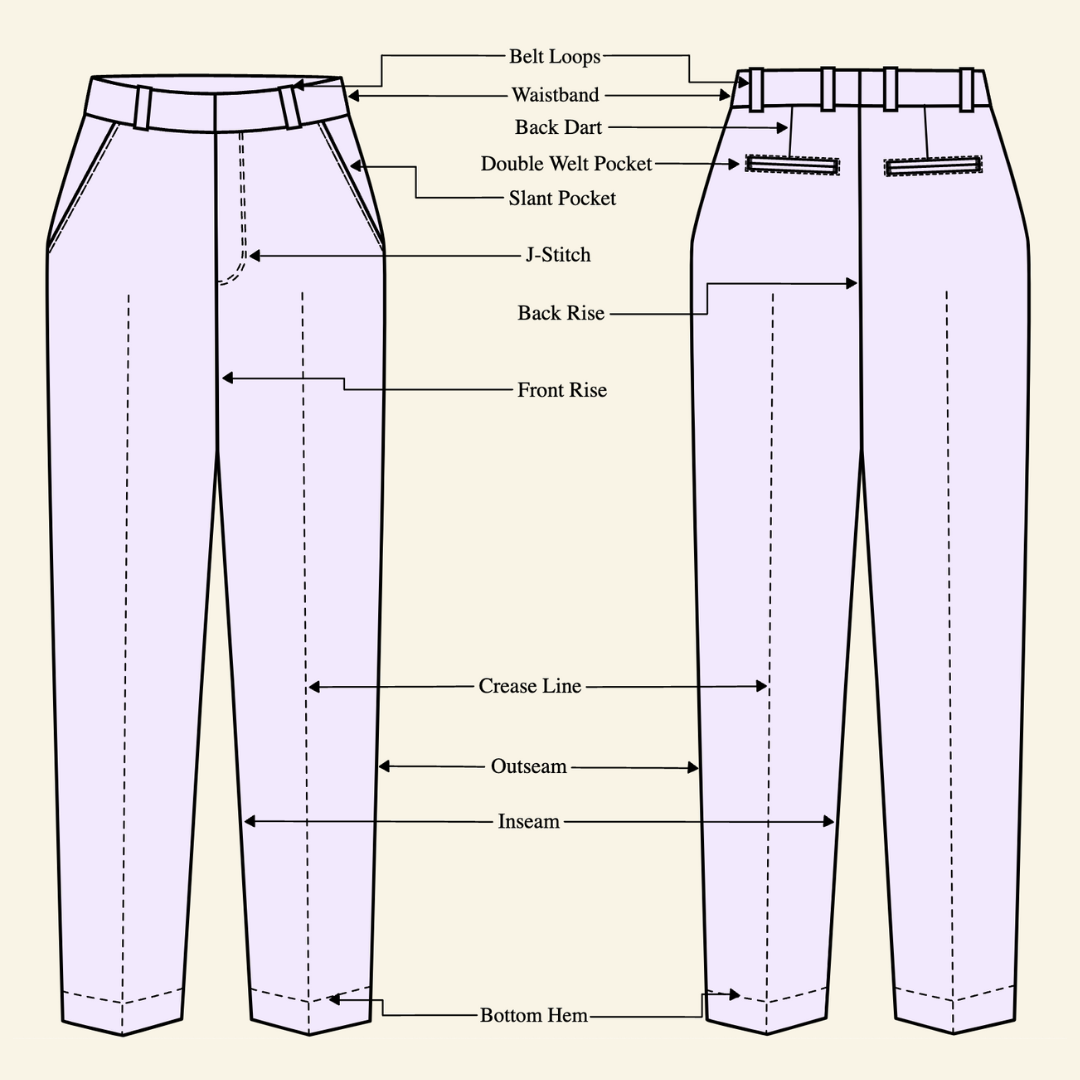
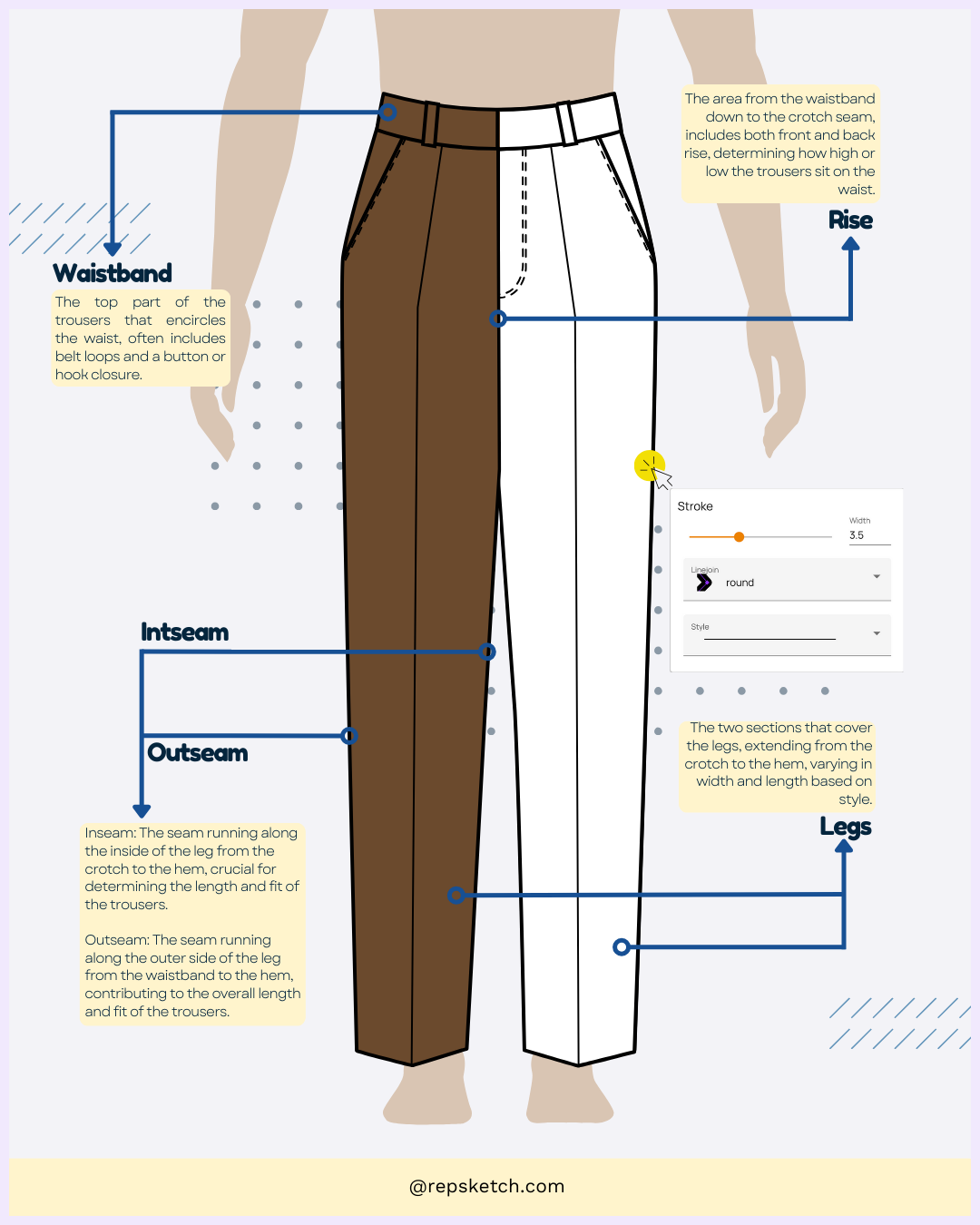
The anatomy of pants includes the various parts and pieces that make up the garment's overall structure and design. Knowing these parts is important for designers, manufacturers, and consumers. Here are the main components of a typical pair of pants:
Waistband: The top edge of the pants, typically reinforced with a band of fabric that encircles the waist. Provides structure and support, often includes belt loops, buttons, or elastic for adjustment.
Front Rise: The distance from the crotch seam to the top of the waistband at the front. Determines how high the pants sit on the front, affecting comfort and style, with variations from low-rise to high-rise.
Back Rise: The distance from the crotch seam to the top of the waistband at the back. Ensures adequate coverage and fit around the buttocks, contributing to the overall balance and comfort of the pants.
Fly: The front closure of the pants, typically featuring a zipper or buttons. Allows easy opening and closing of the pants, with some styles including an additional button or hook for secure fastening.
Inseam: The seam running along the inside of the leg from the crotch to the hem. A key measurement for determining the length of the pants, influencing fit and style.
Outseam: The seam running from the waistband to the hem along the outer side of the leg. Another crucial length measurement, often used in tailoring to achieve the desired pant length.
Crotch: The area where the front and back rises meet, forming a junction at the base of the fly and the top of the inseam. Vital for fit and comfort, affecting how the pants move and sit on the body.
Seat: The area covering the buttocks, shaped by the back rise and the width of the pant legs. Ensures a snug fit around the hips and buttocks, impacting the overall silhouette of the pants.
Pockets: Functional and decorative elements typically found on the front, sides, and back of the pants. Provide storage and style accents, with variations such as slash pockets, welt pockets, and cargo pockets.
Hem: The bottom edge of the pant legs, finished to prevent fraying and achieve the desired length. Affects the overall appearance, with styles ranging from cuffed to raw or tapered hems.
Pleats: Folds of fabric sewn into the waistband, usually at the front. Add volume and ease of movement, often seen in dress pants for a more formal look.
Darts: Tapered seams that shape the fabric to fit the contours of the body, usually found in the back. Enhance the fit by taking in excess fabric, creating a tailored and fitted appearance.
Yoke: A panel of fabric at the back of the pants, just below the waistband, commonly found in jeans. Adds shape and support, contributing to a better fit around the hips and waist.
These components work together to create a pair of pants that fits well, looks good, and provides comfort and functionality. Understanding each part helps in designing, altering, and selecting pants that meet specific needs and preferences.
Points of Measurement
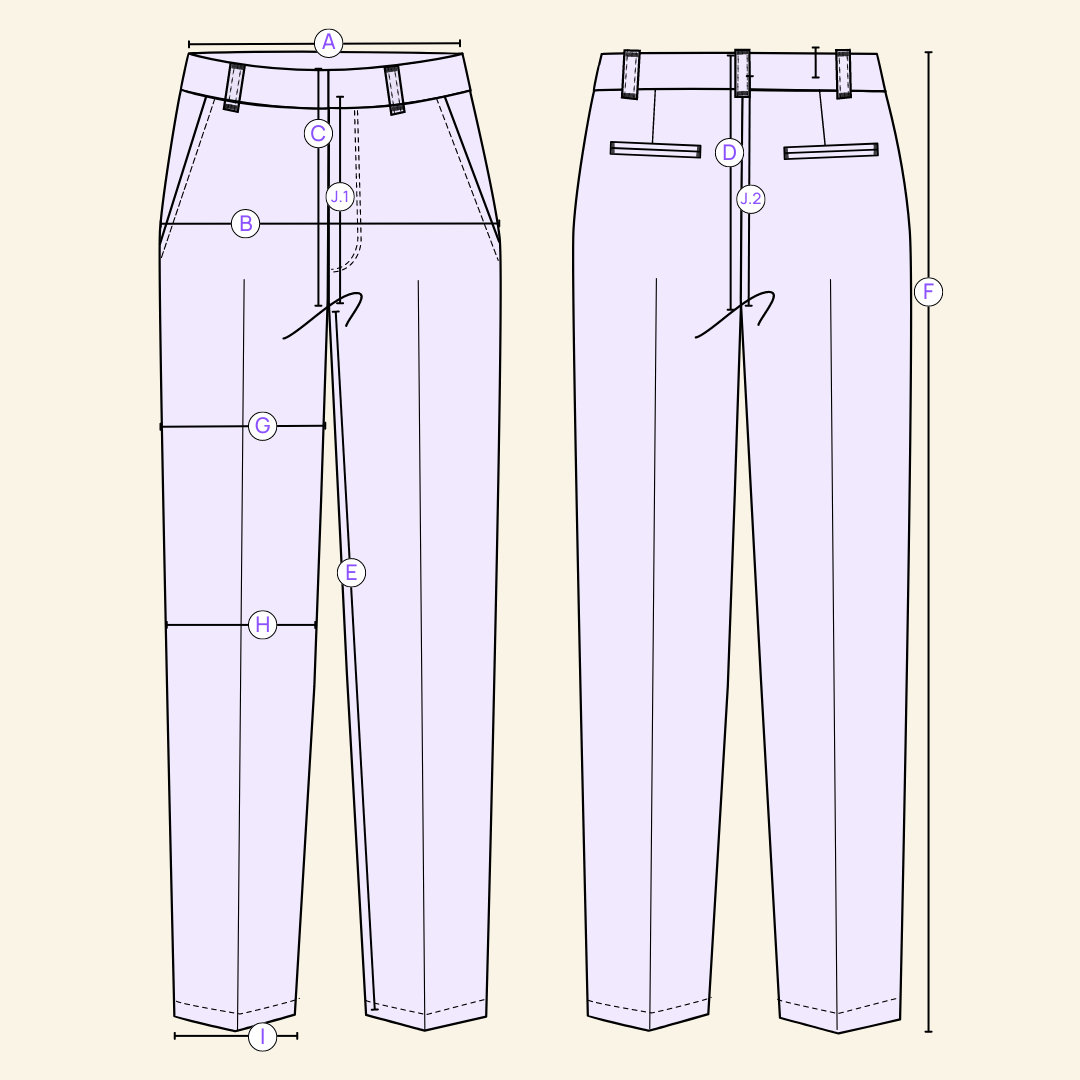
When designing or fitting pants, understanding the key points of measurement is crucial for ensuring a perfect fit. These measurements help in creating a garment that is not only comfortable but also flattering. Here are the essential points of measurement for pants:
A - Waist: Measure around the narrowest part of the waist, typically just above the belly button. This measurement ensures that the waistband fits snugly without being too tight.
B - Hip: Measure around the fullest part of the hips, usually about 7-9 inches below the waistline. This is crucial for ensuring the pants fit well around the hips and buttocks.
C - Front Rise: Measure from the top of the waistband at the front to the crotch seam. This determines how high the pants sit on the front of the body.
D - Back Rise: Measure from the top of the waistband at the back to the crotch seam. This is typically longer than the front rise to accommodate the curvature of the back.
E - Inseam: Measure from the crotch seam to the bottom of the pant leg. This determines the length of the pants from the crotch to the ankle.
F - Outseam: Measure from the top of the waistband to the bottom of the pant leg along the side seam. This helps in determining the overall length of the pants.
G - Thigh: Measure around the fullest part of the thigh, just below the crotch. This ensures the pants are comfortable around the upper leg.
H - Knee: Measure around the knee area, typically midway down the pant leg. This is important for pants that are fitted or tapered at the knee.
I - Leg Opening: Measure around the bottom of the pant leg. This measurement is crucial for different styles of pants, such as skinny, straight, or flared.
J - Crotch Depth: Measure from the center of the waistband at the front to the center of the waistband at the back, passing through the crotch. This helps in determining the overall rise and fit of the pants.
Understanding these key points of measurement ensures that your pants fit well and are comfortable to wear. Whether you're designing new pants or altering existing ones, these measurements are essential for achieving a perfect fit.
Types of Pants
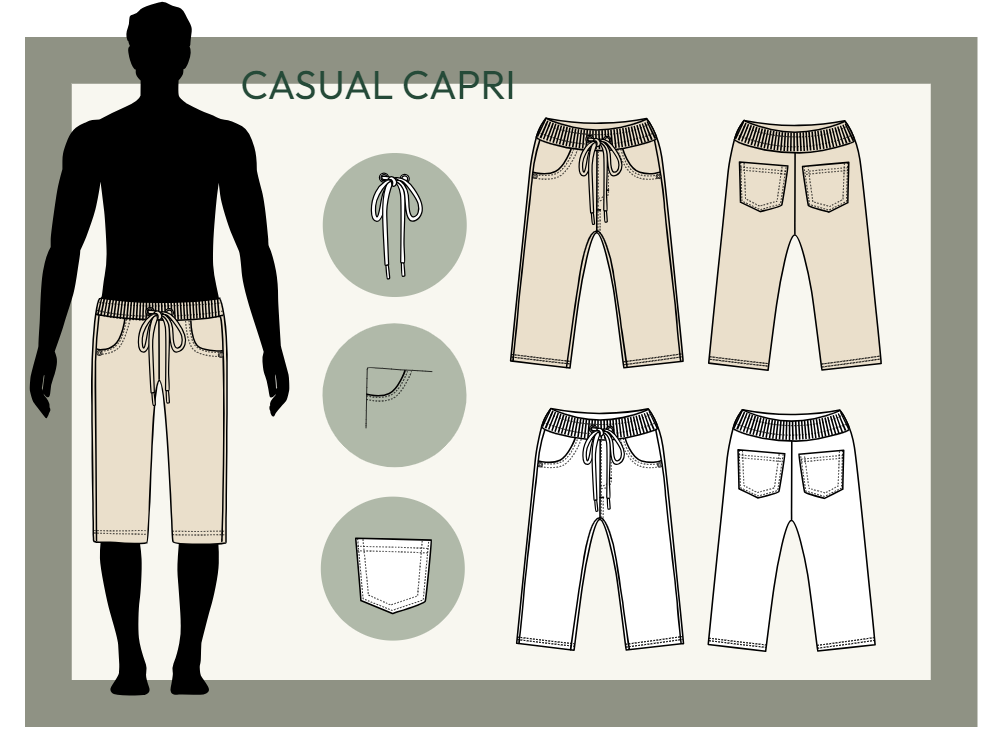
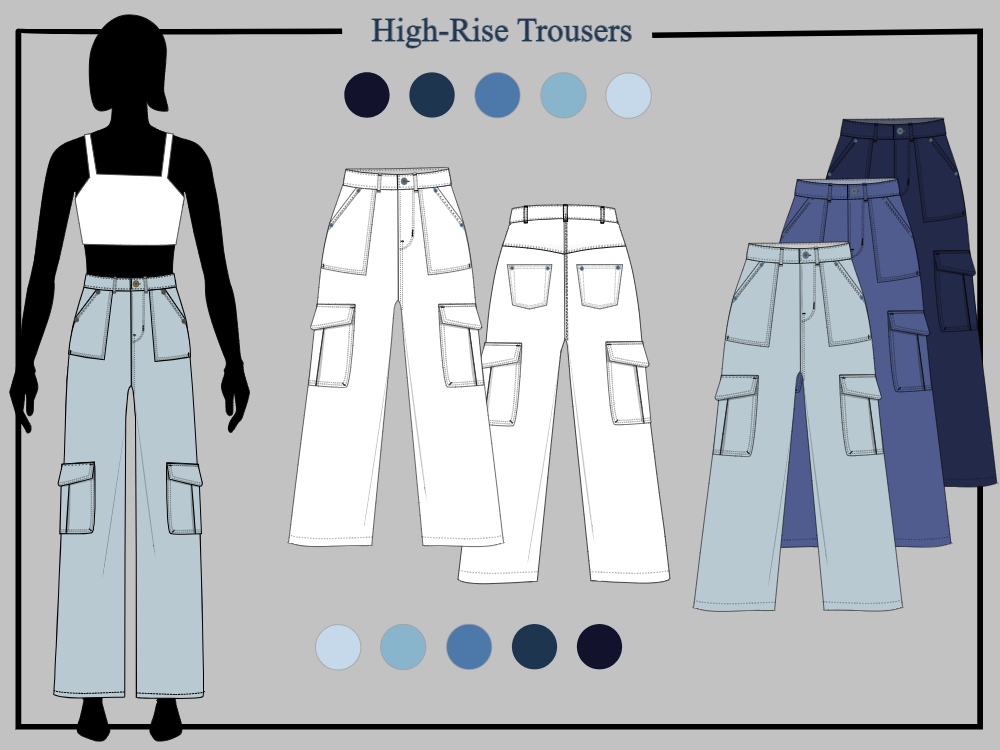
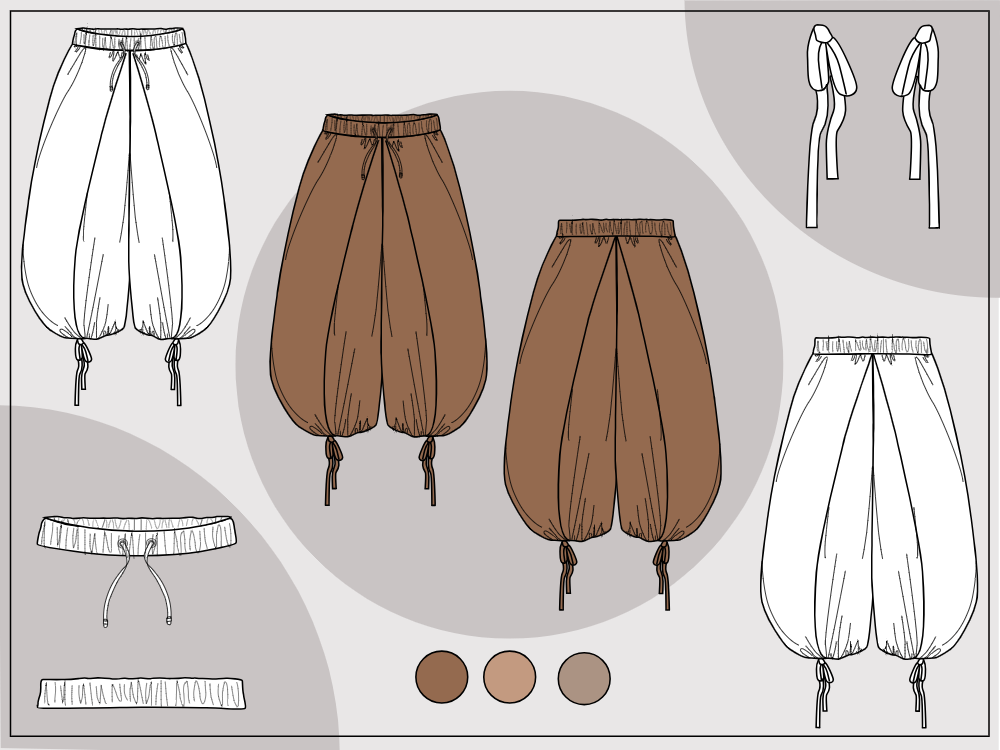
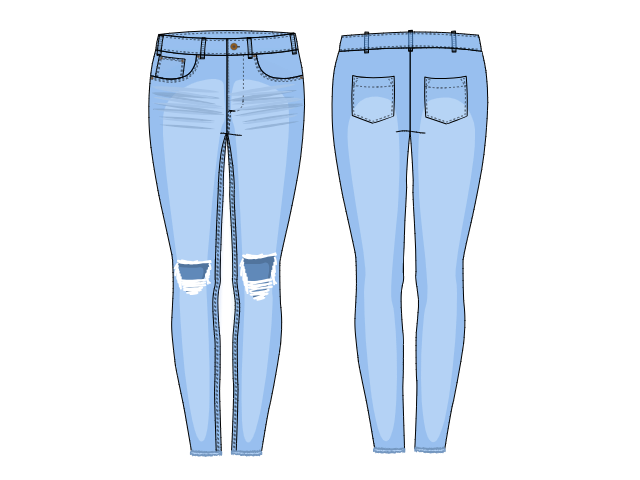
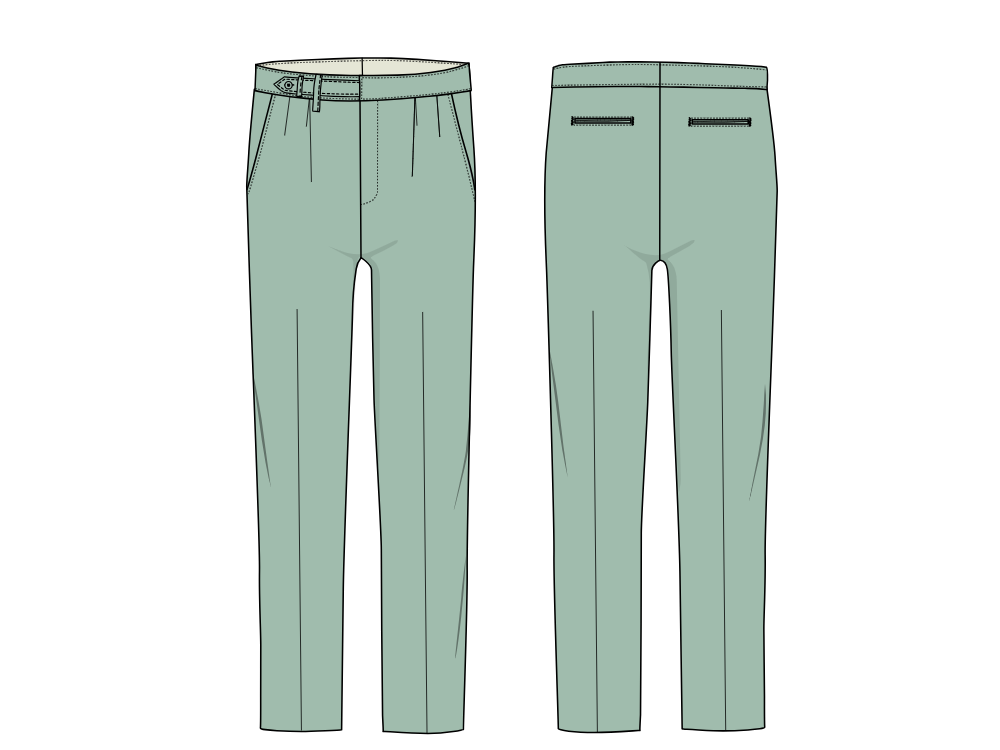
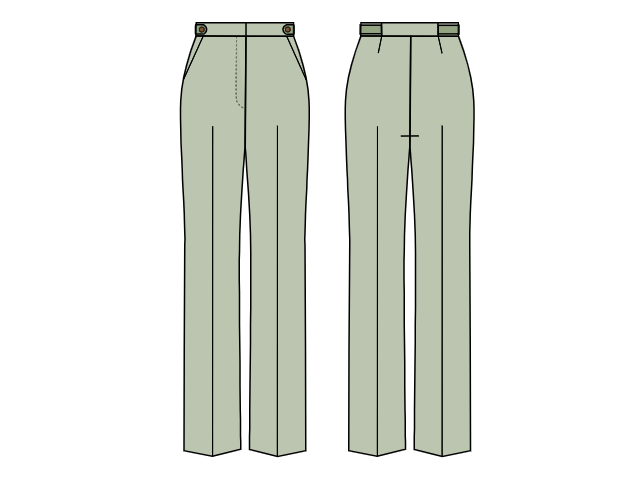
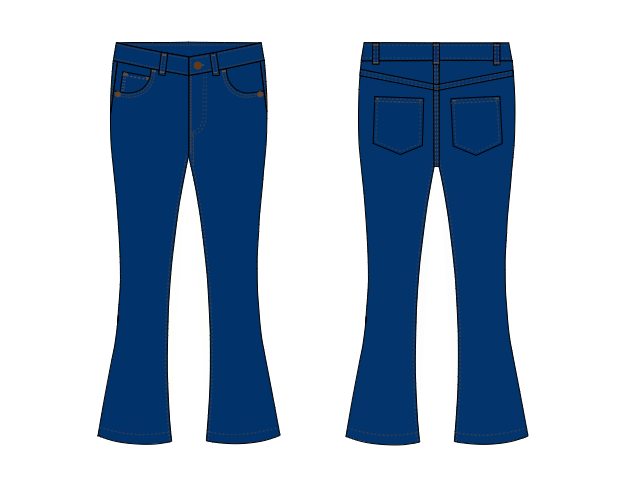
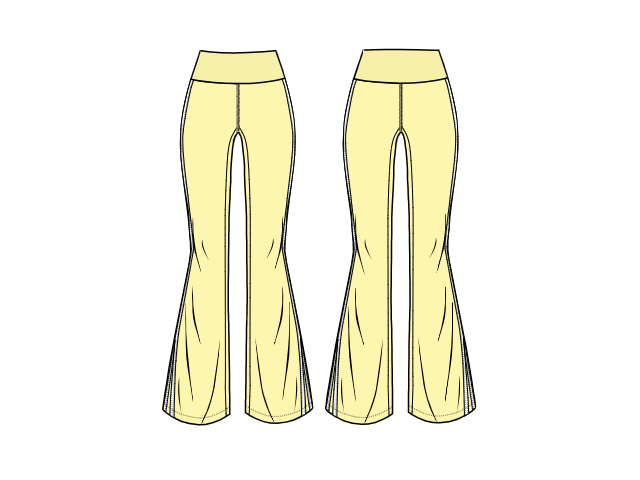
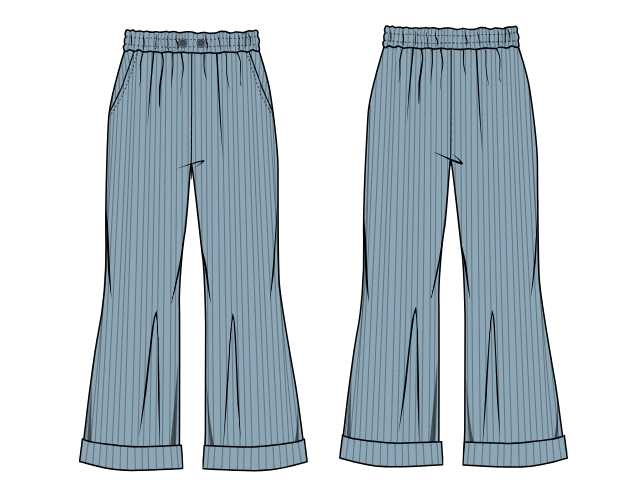
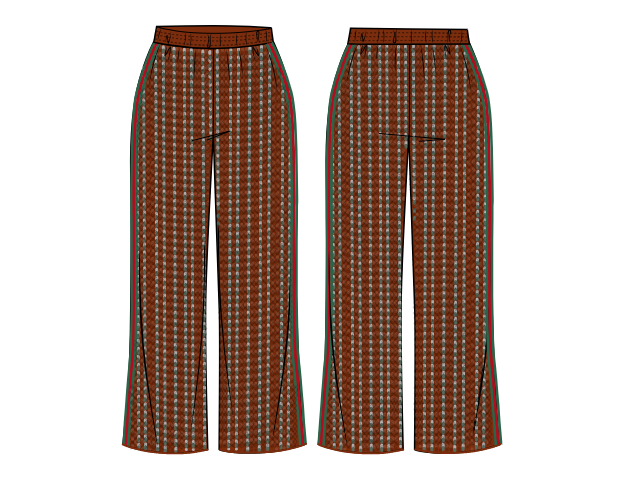
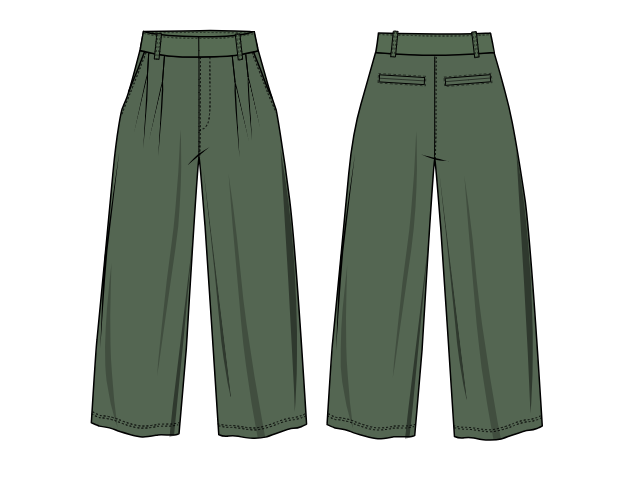
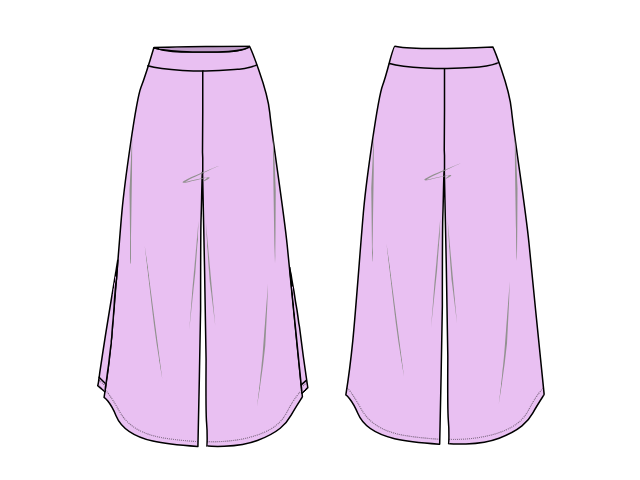
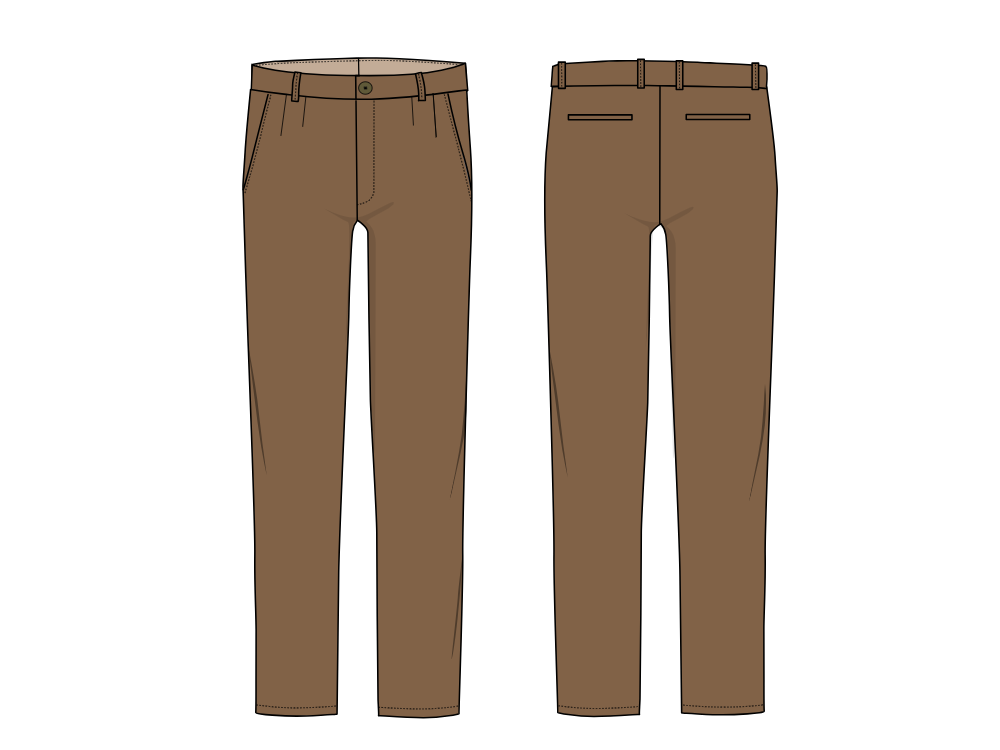
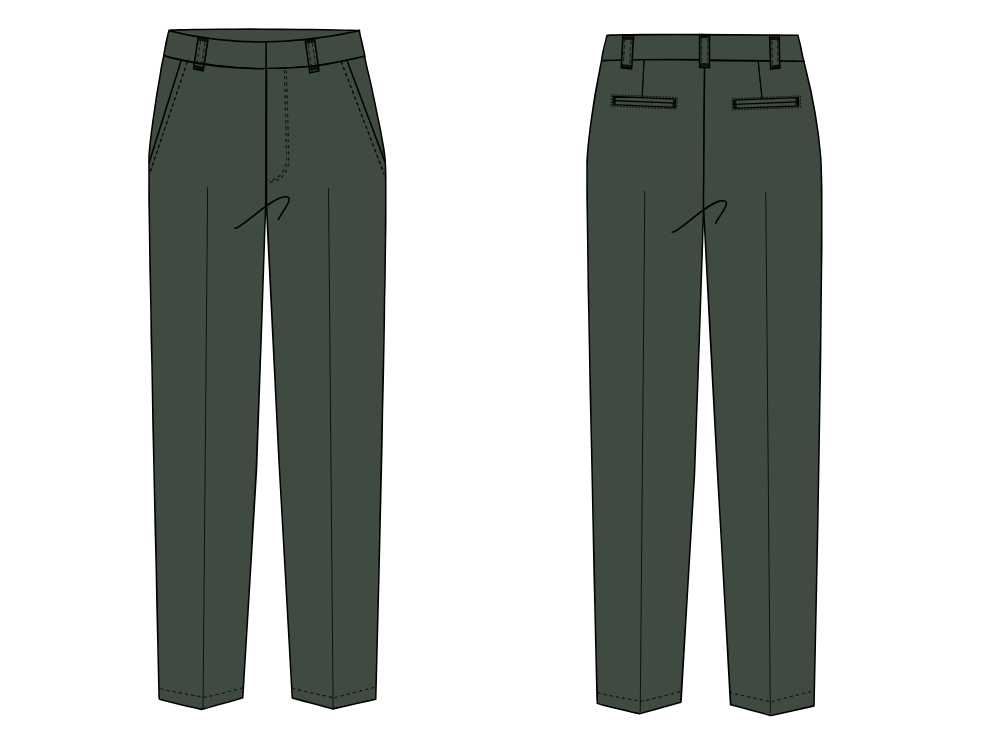
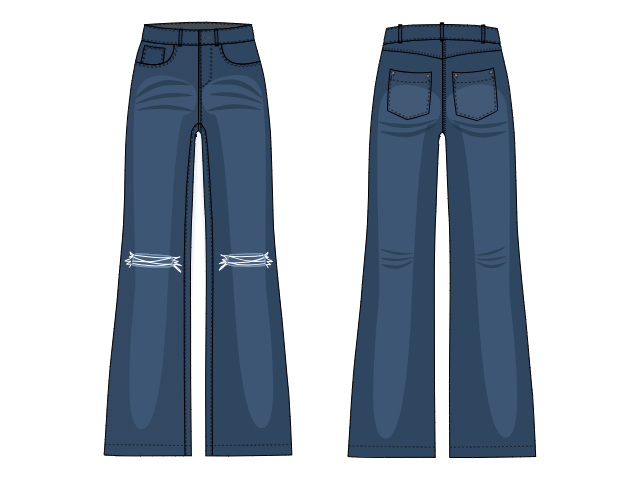
Pants are a wardrobe staple, but the variety can be overwhelming. Understanding the different types of pants can help you choose the right style for any occasion. In this section, we'll explore pants based on fit, length, waist placement (rise), and special features. From skinny to wide-leg, full-length to shorts, high-waisted to cargo pants, we'll cover the diverse options available to elevate your fashion game. Whether you're looking for something casual or formal, practical or stylish, there's a perfect pair of pants for everyone.
Types of Pants based on Fit:
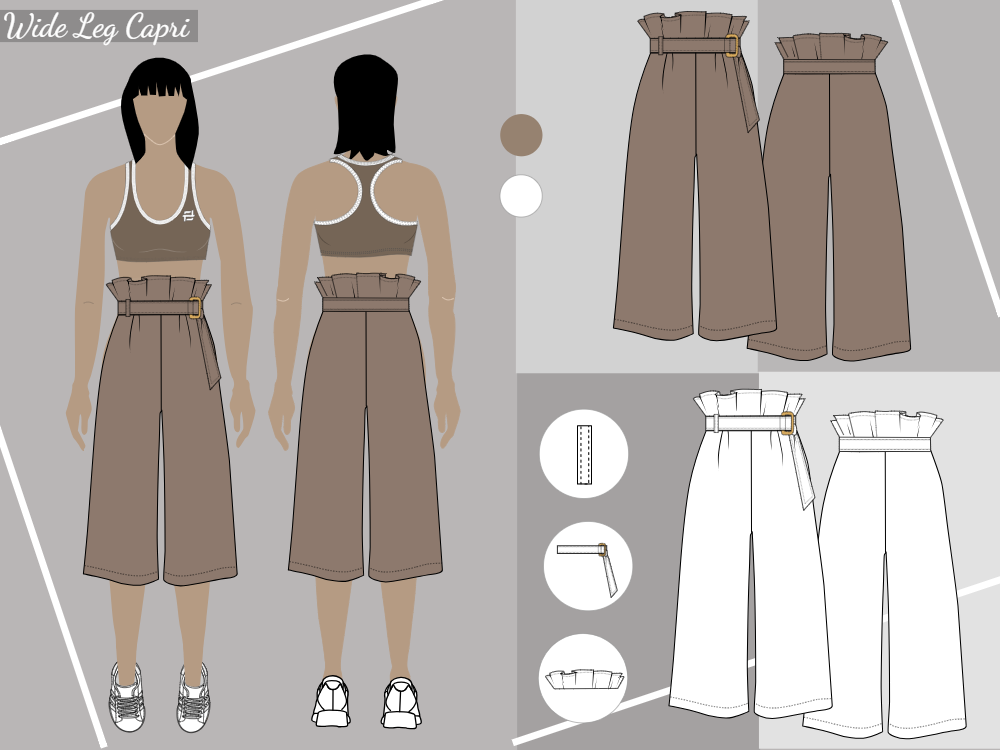
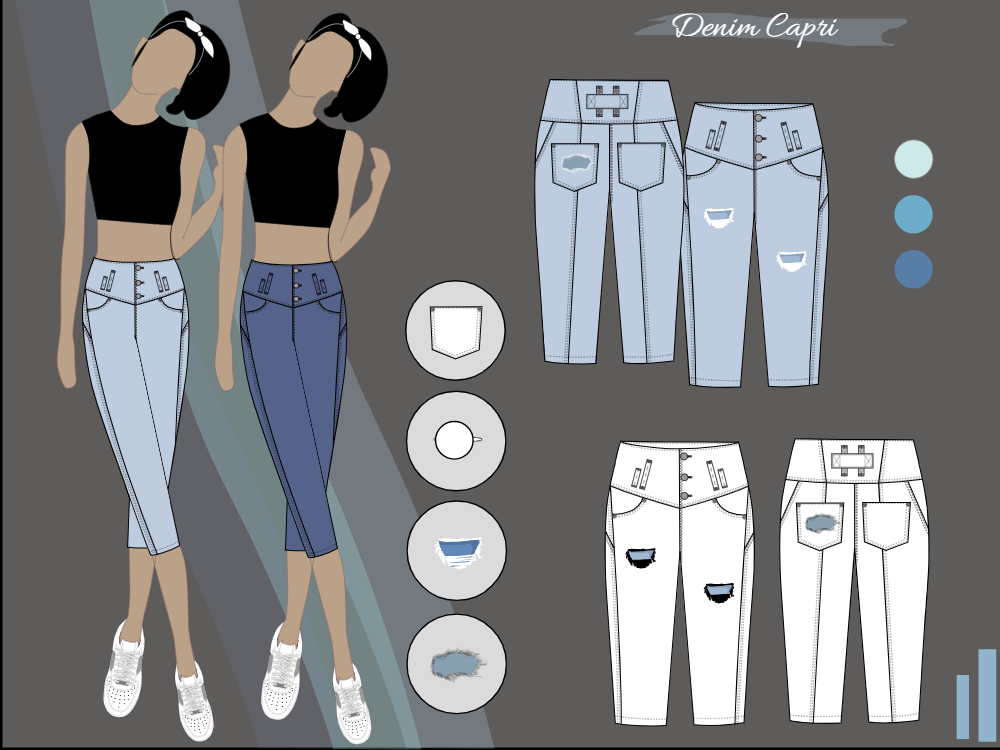
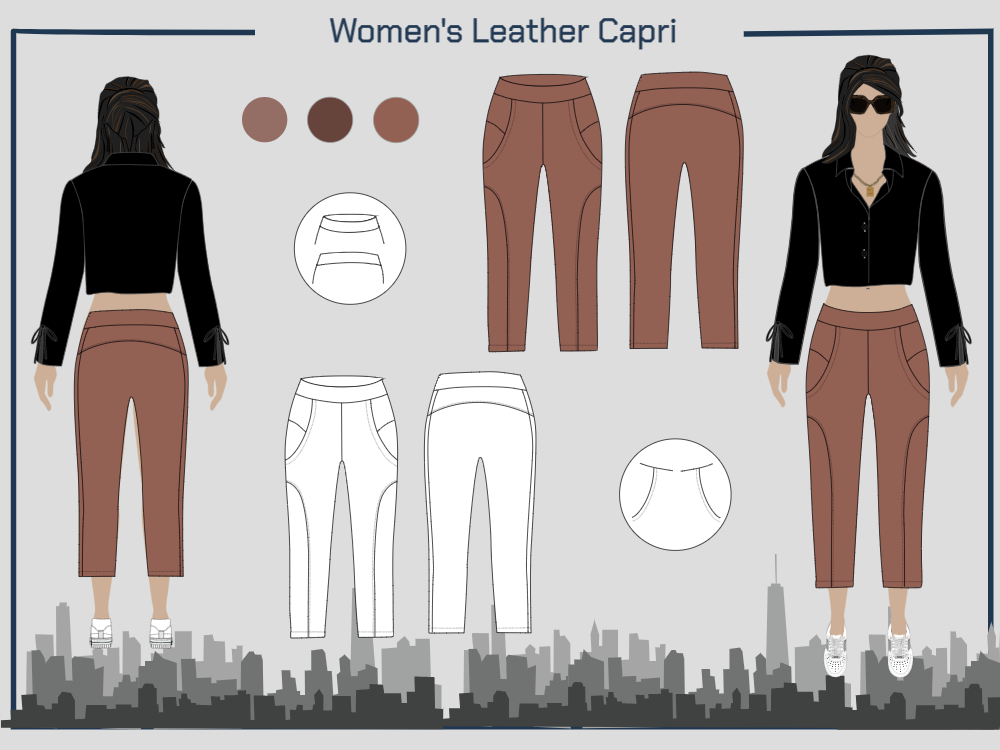
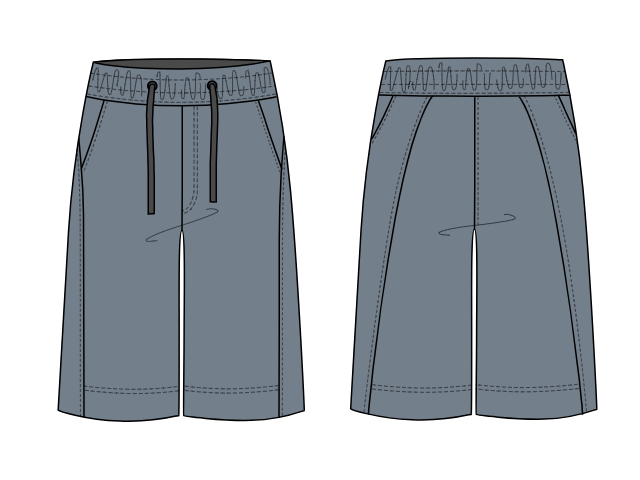
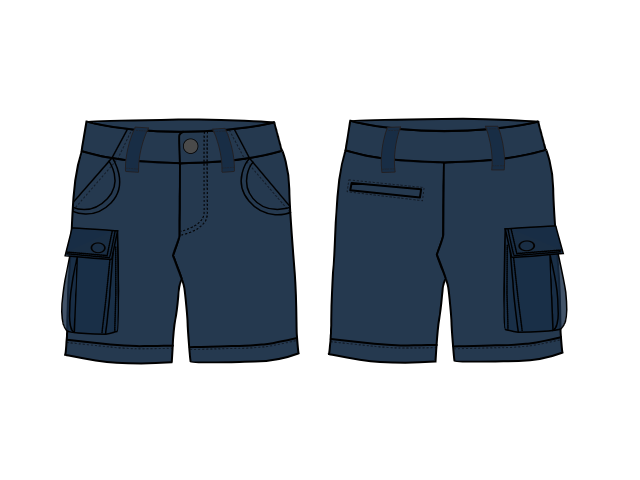
Types of Pants based on Length:
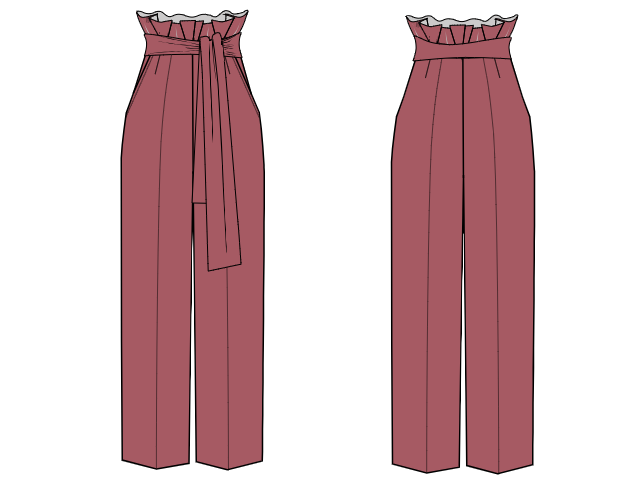
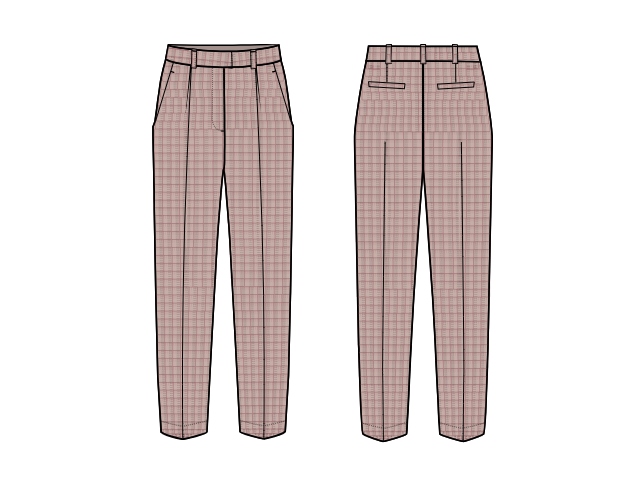
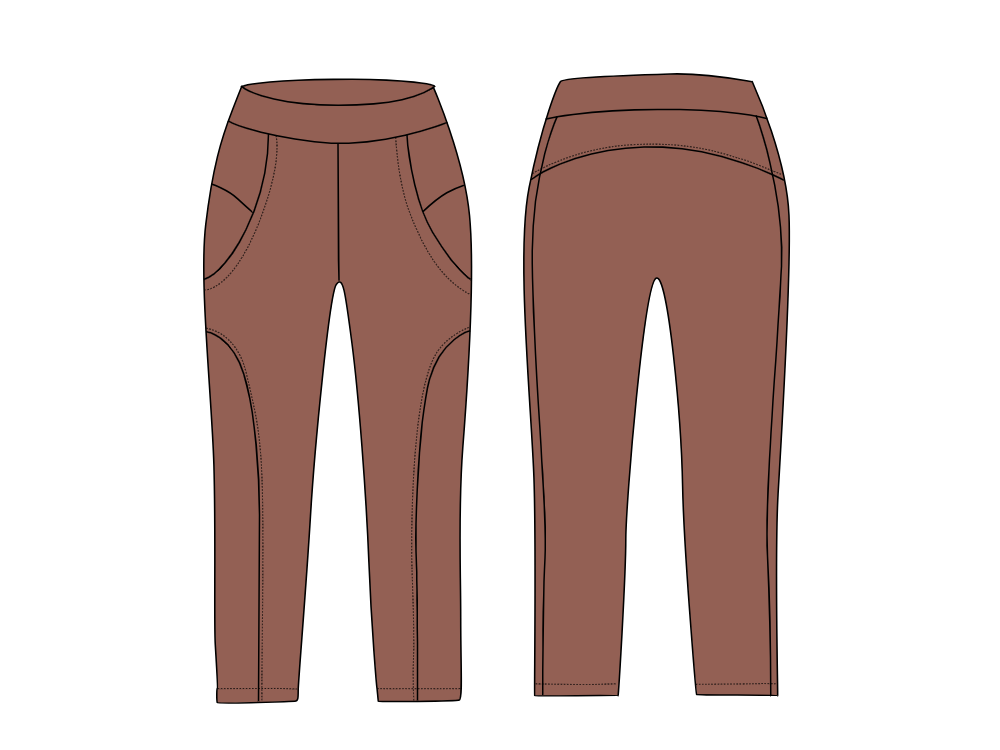
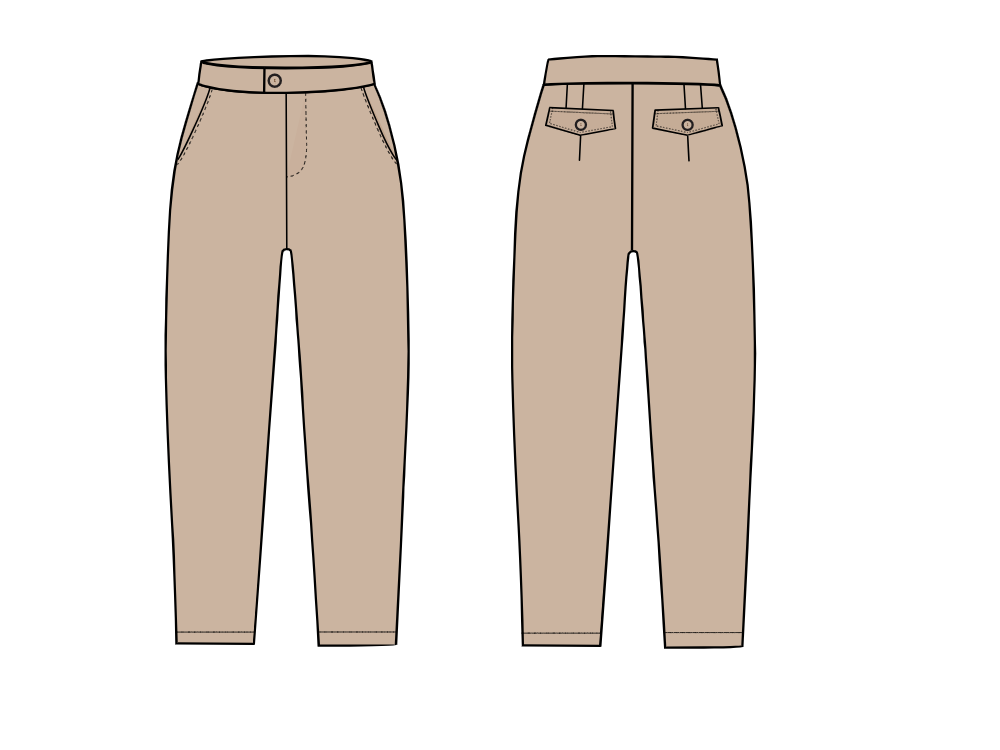
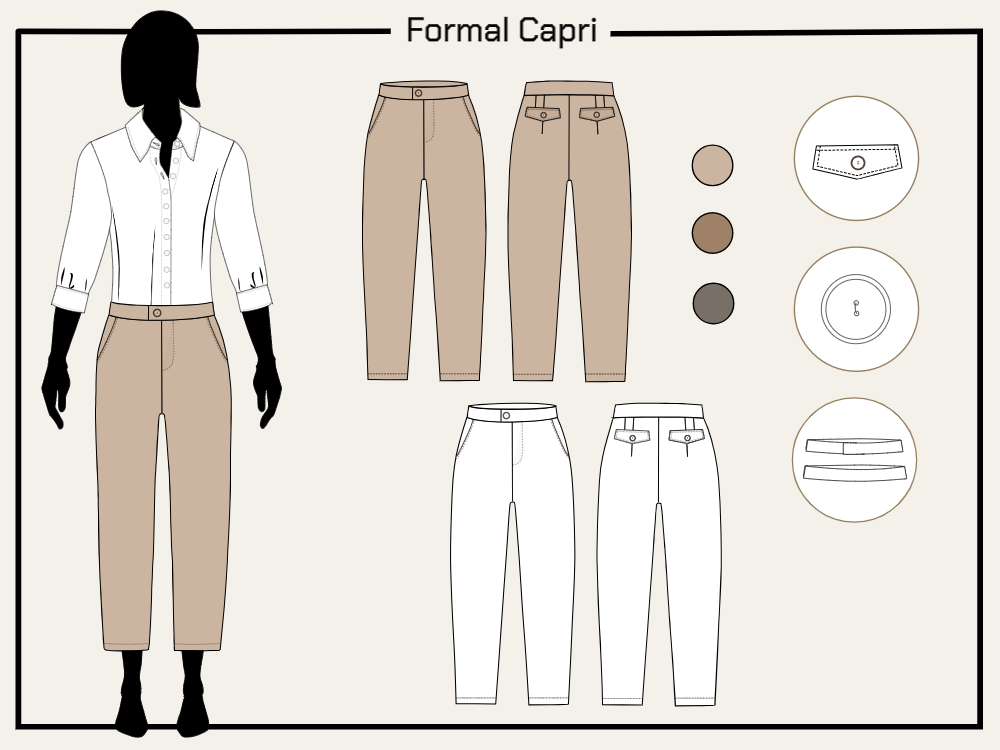
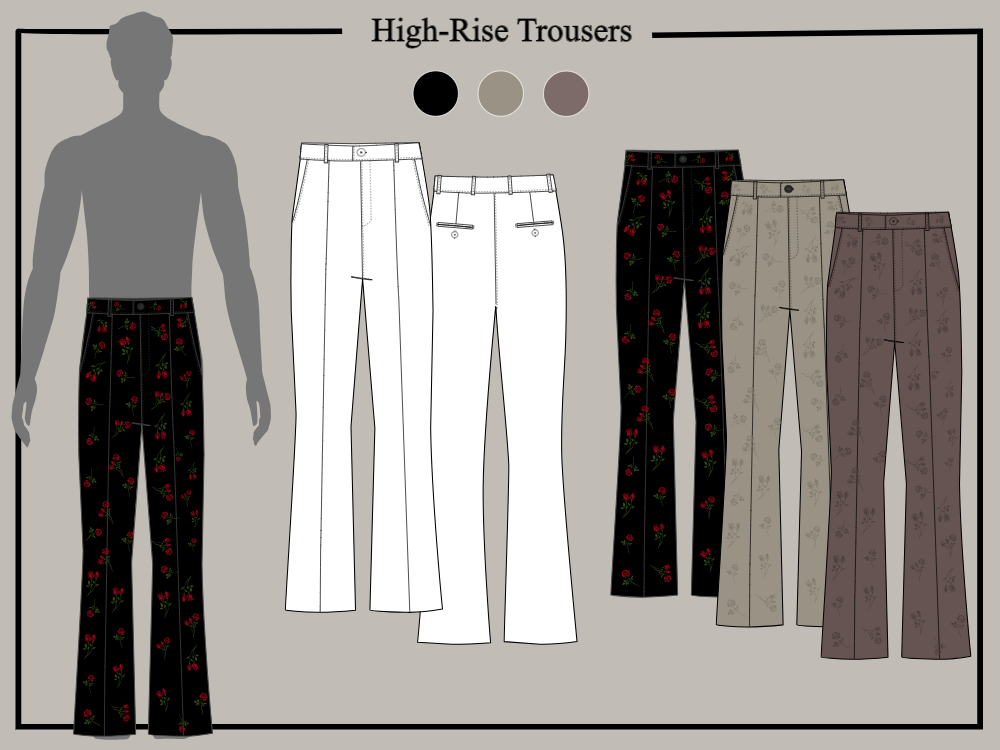
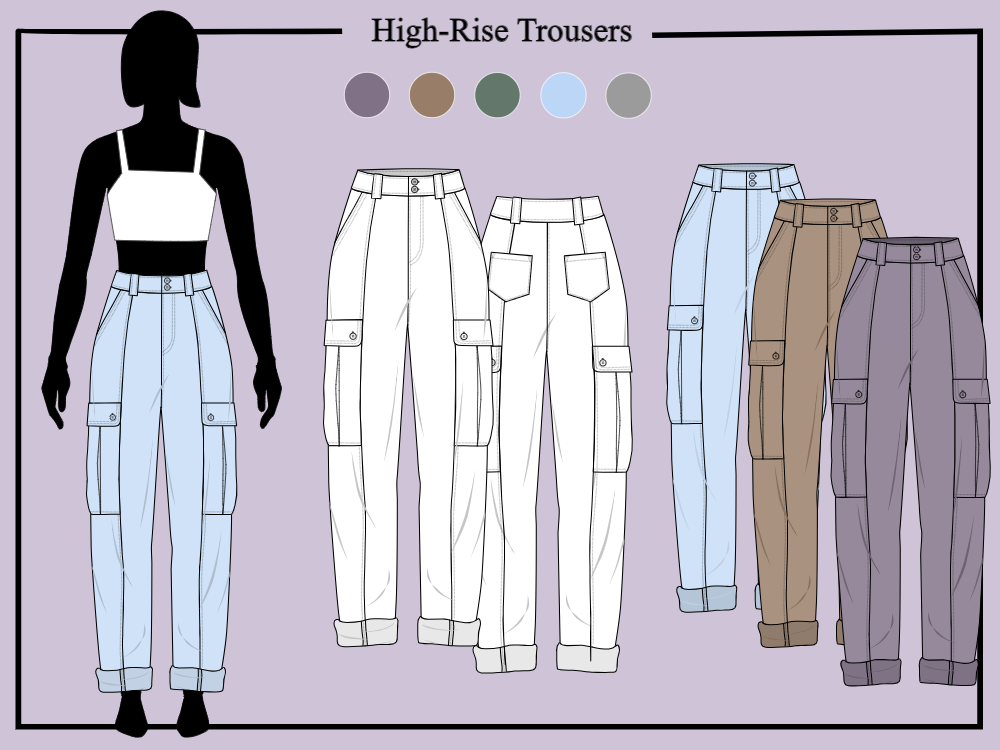
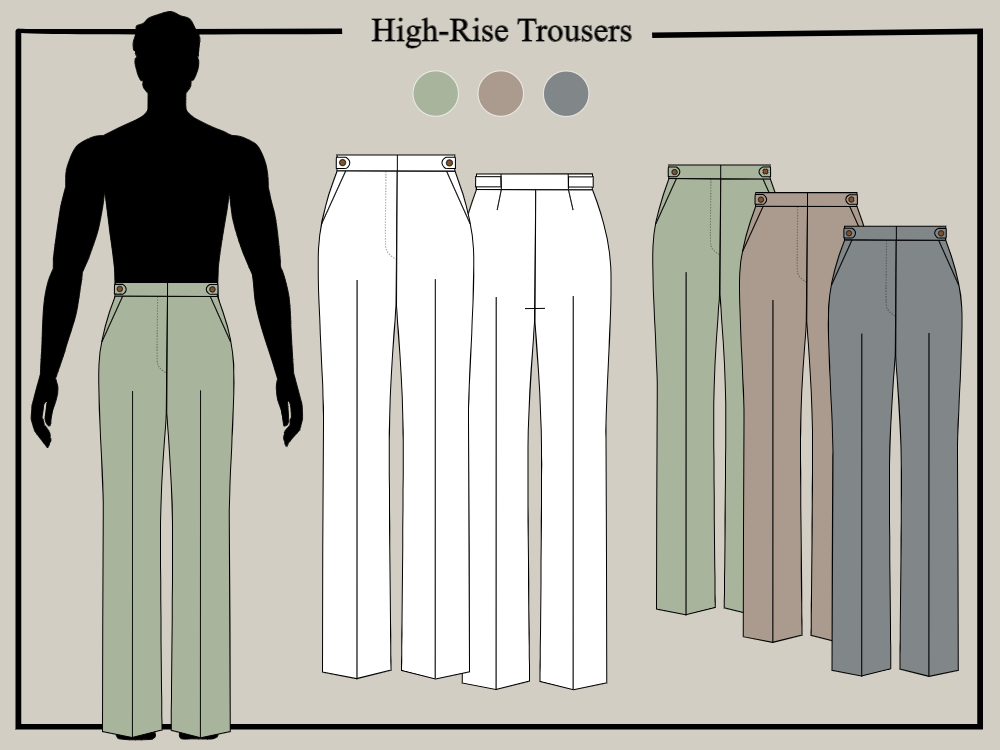
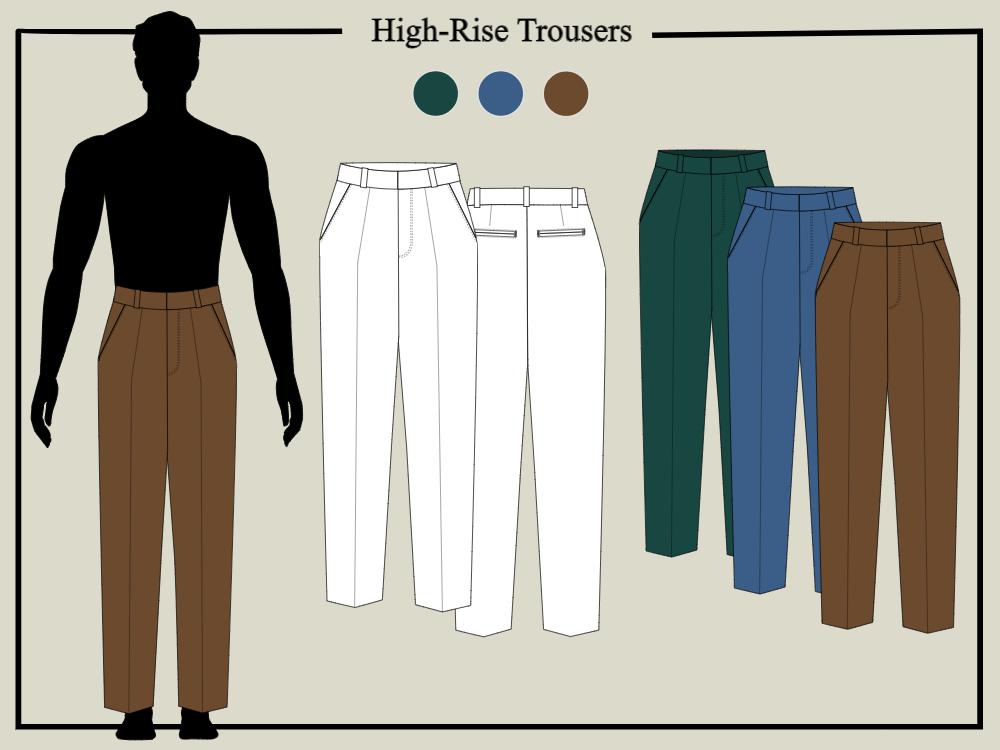
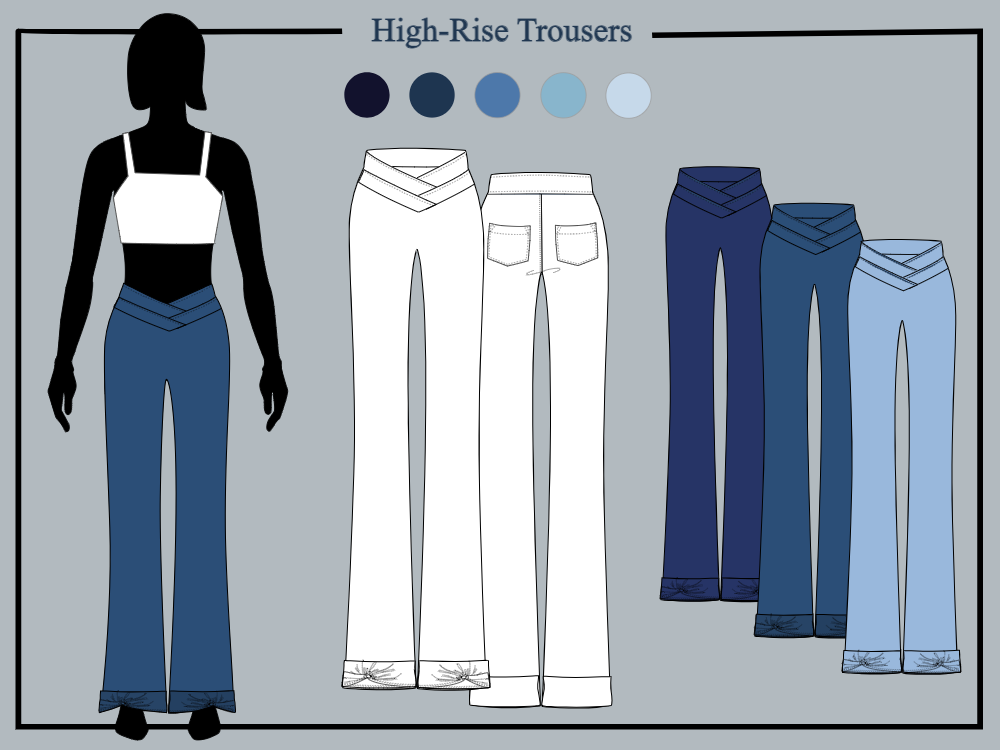
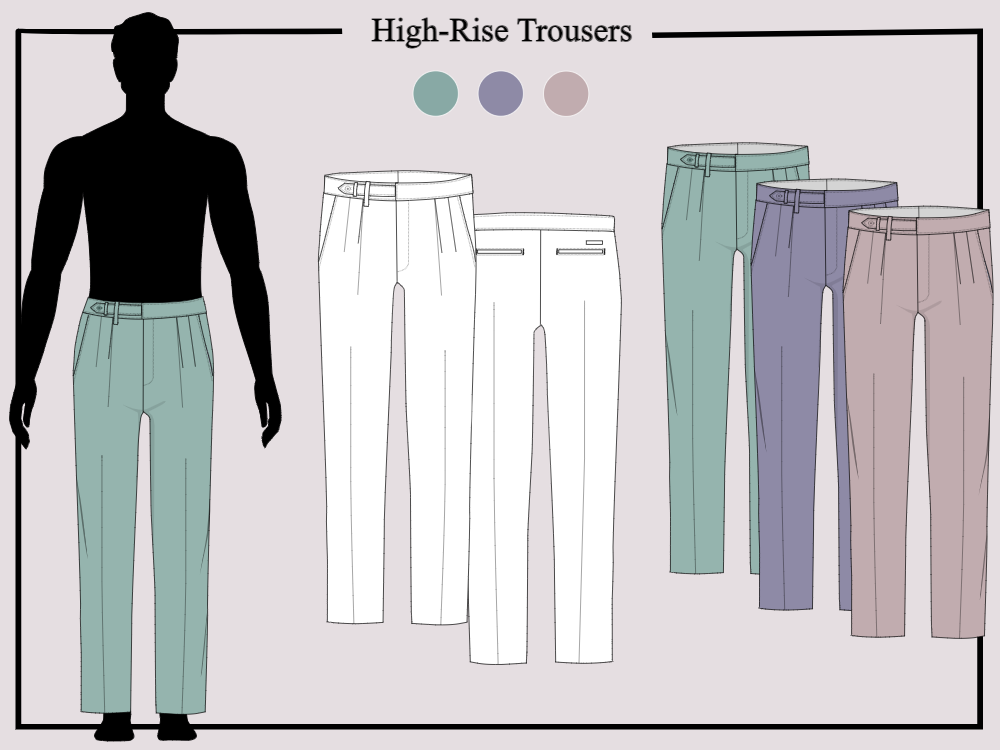
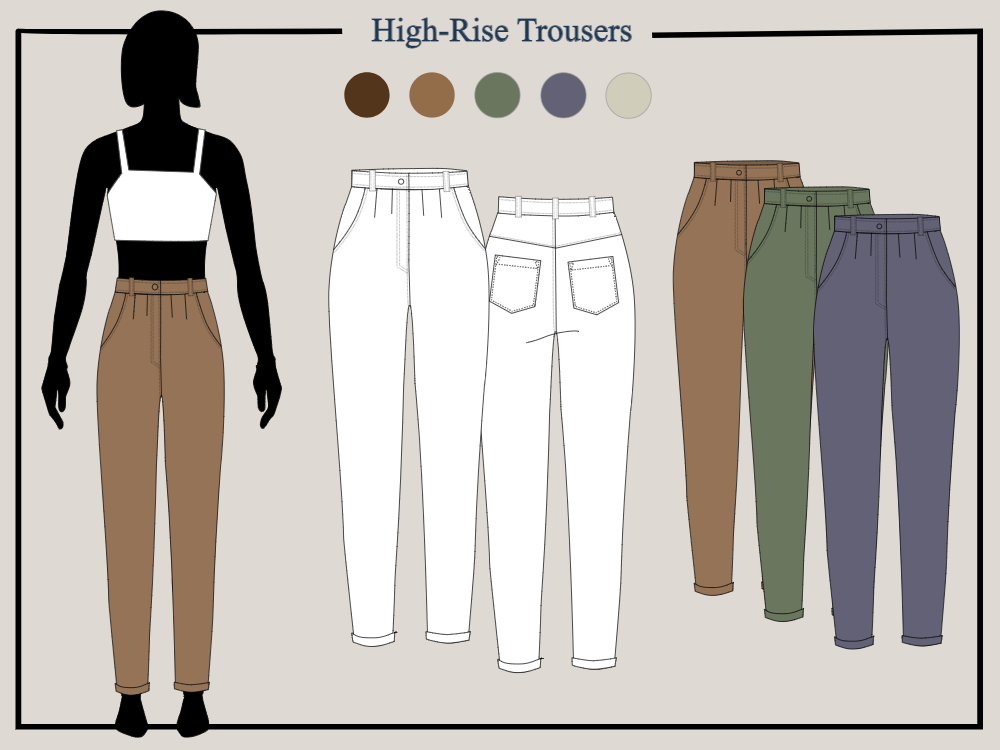
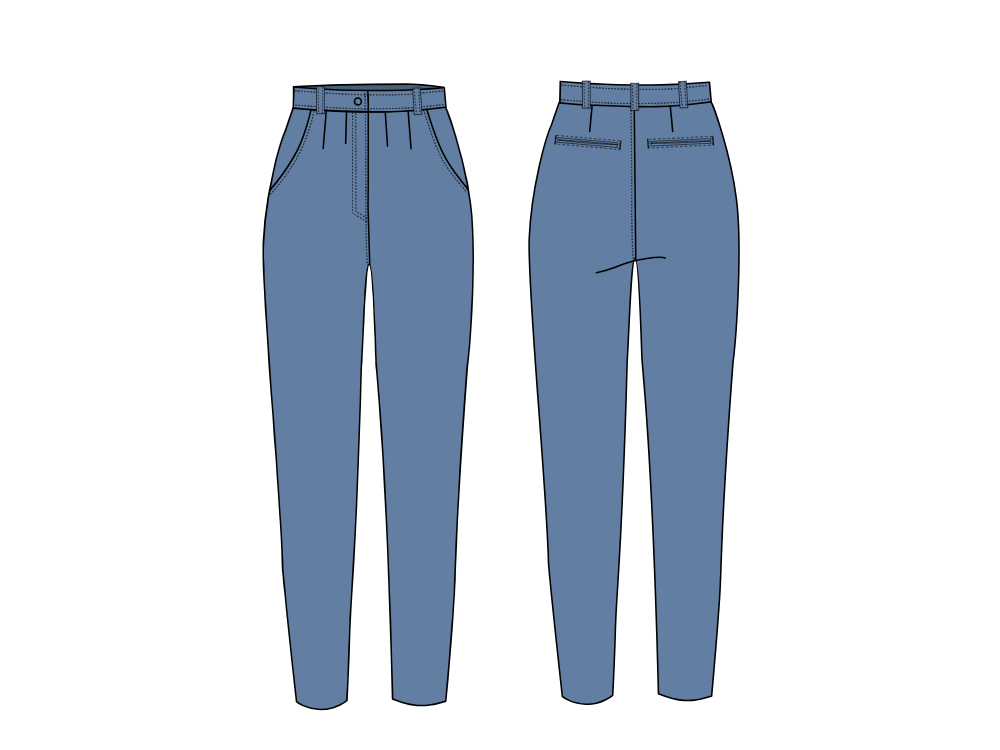
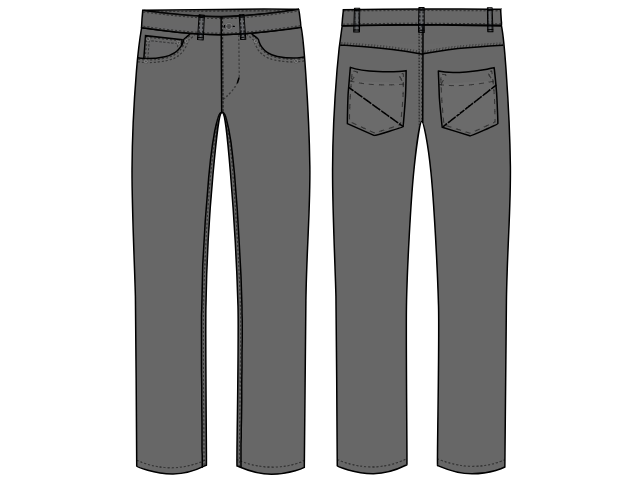
Types of Pants based on Rise:
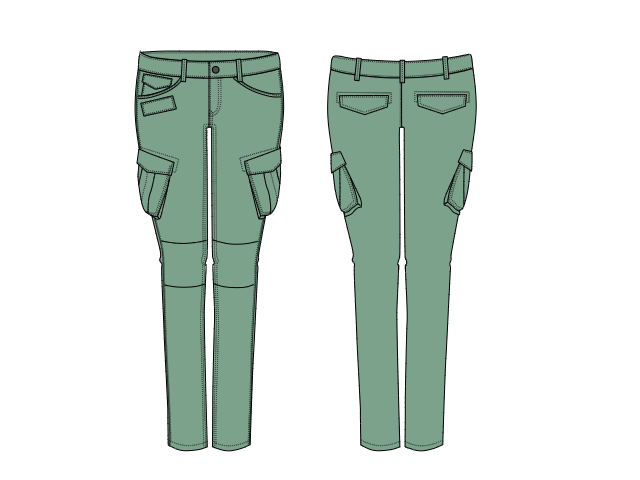
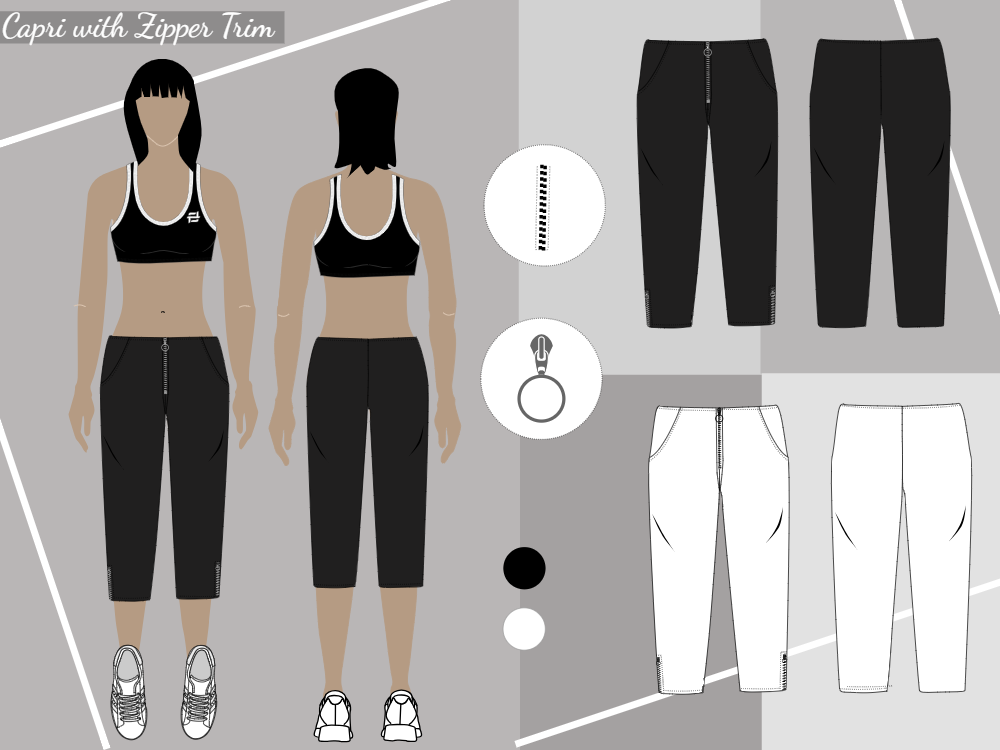
Types of Pants based on Special Features:
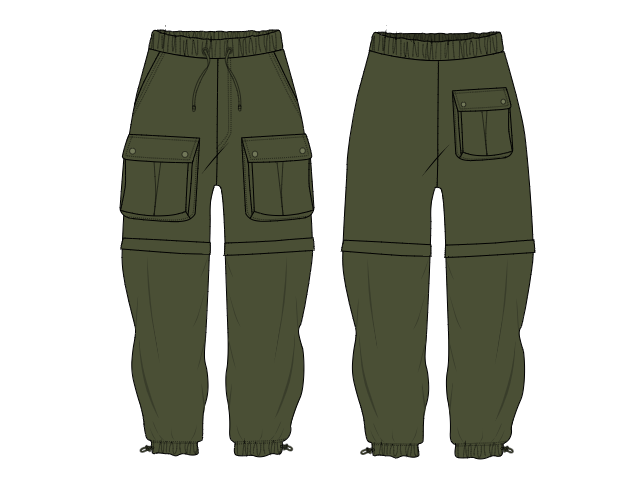
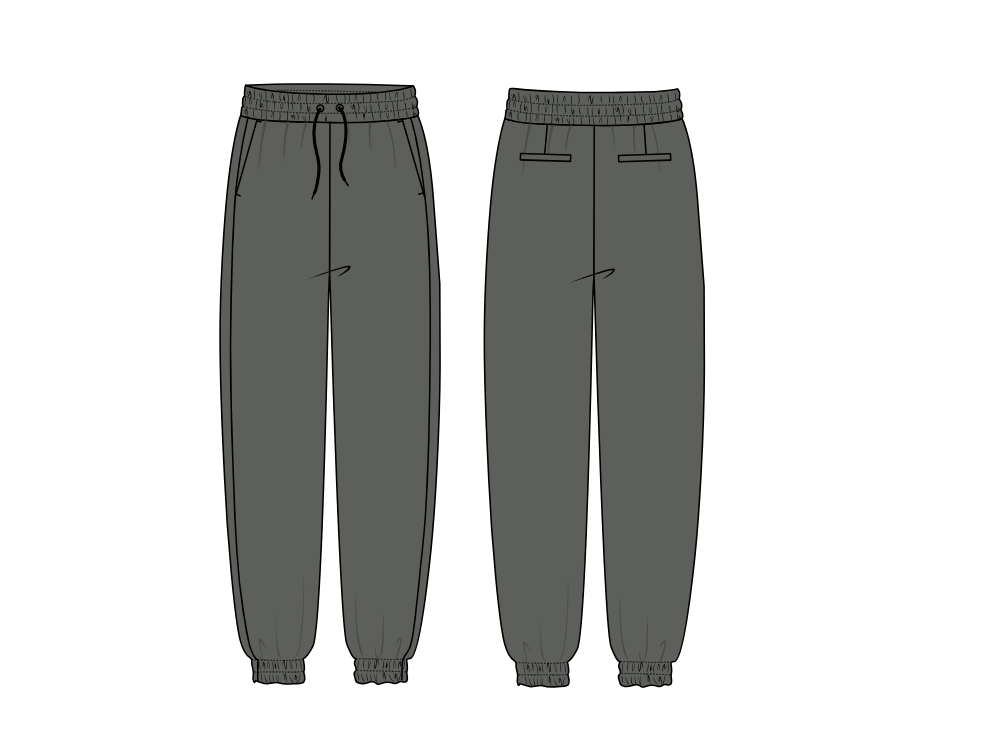
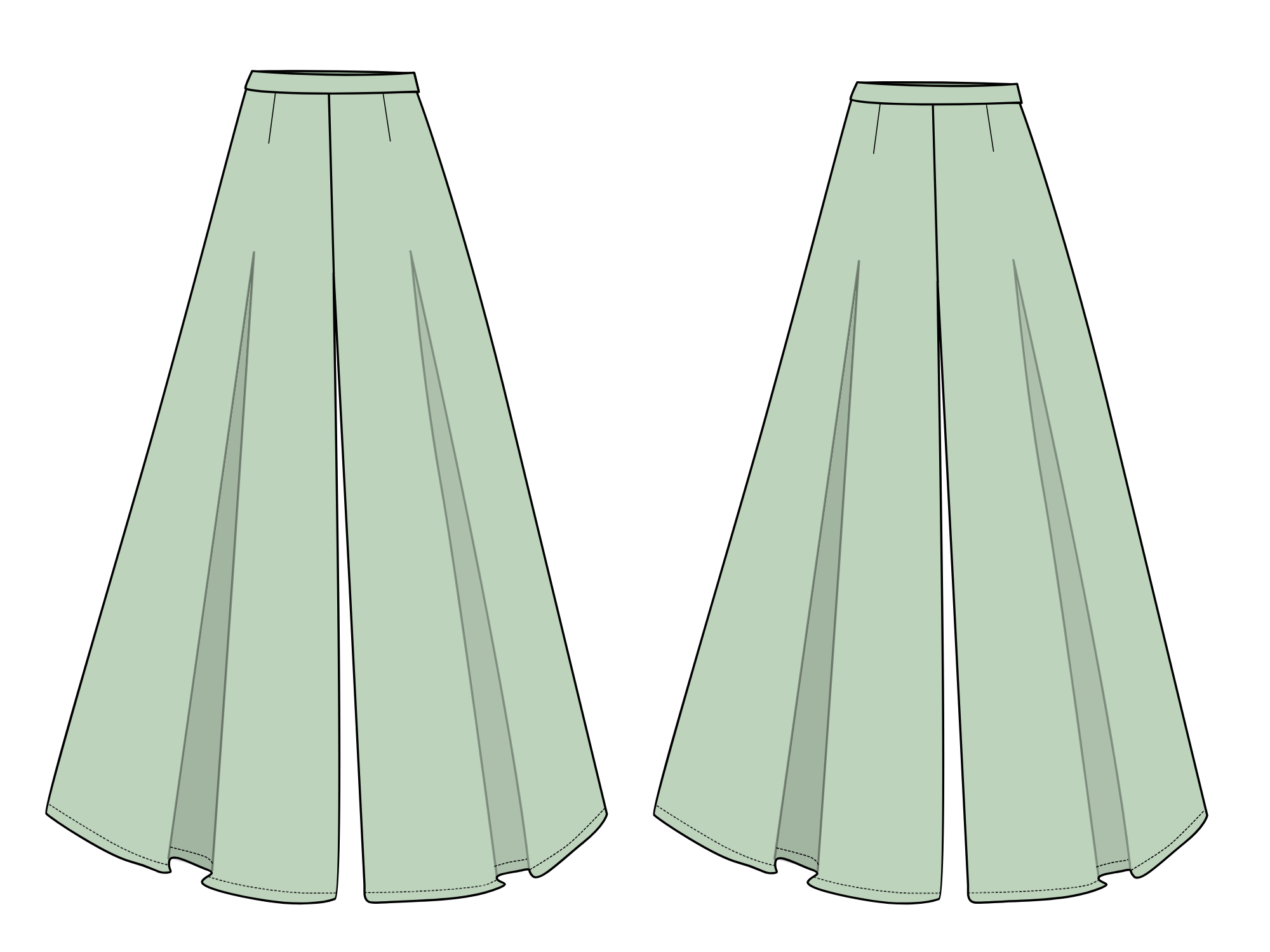
How to Draw a Pant Sketch
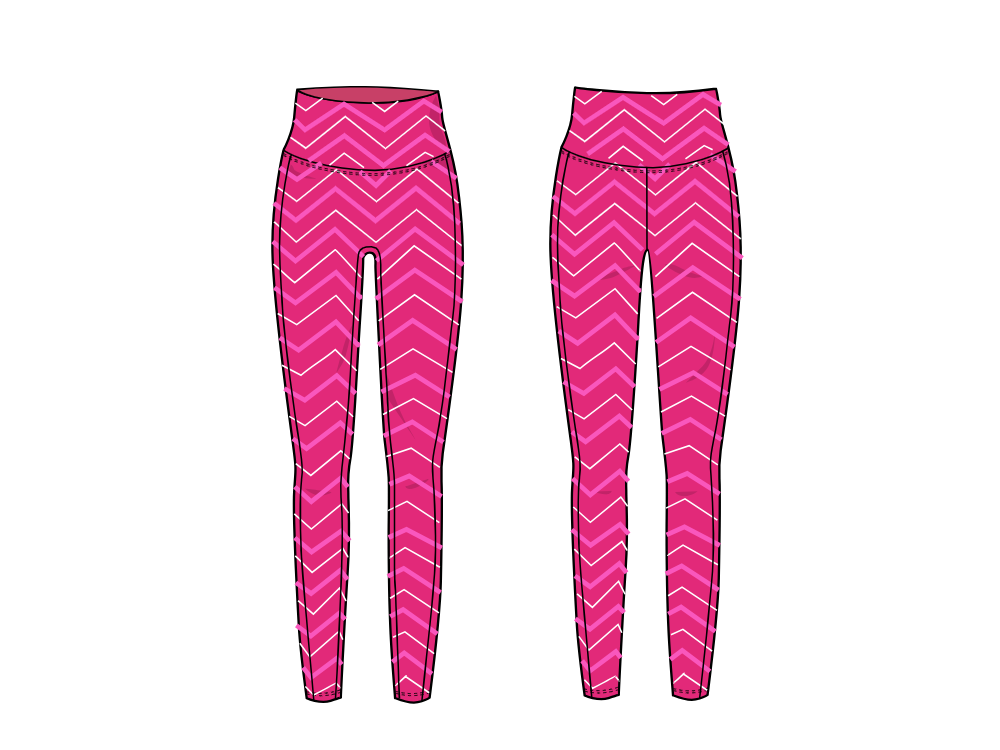
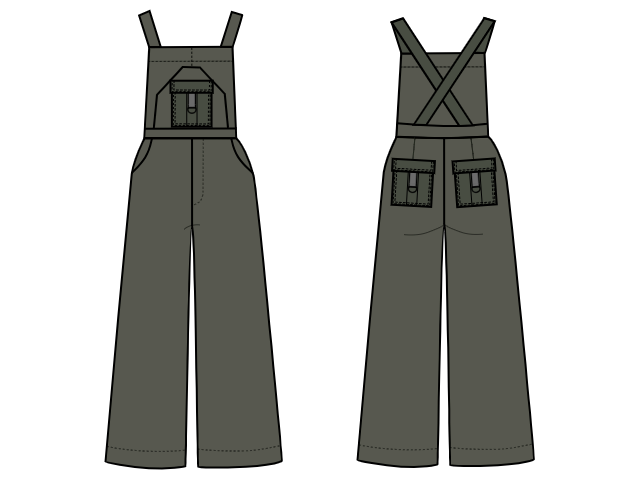
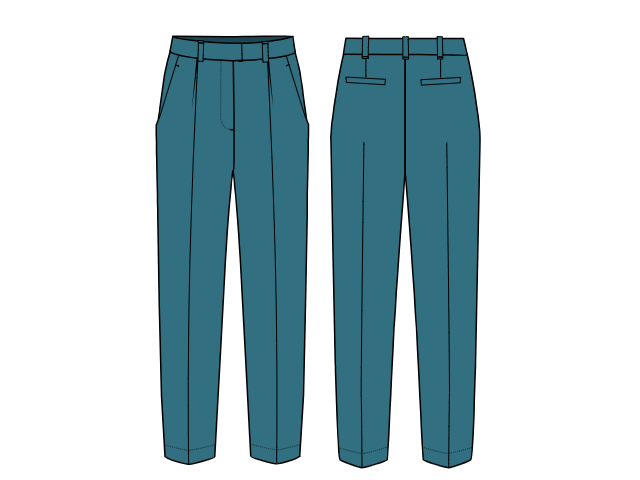
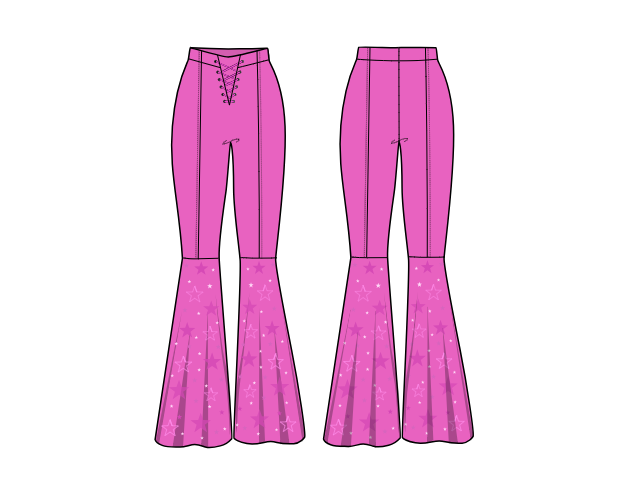
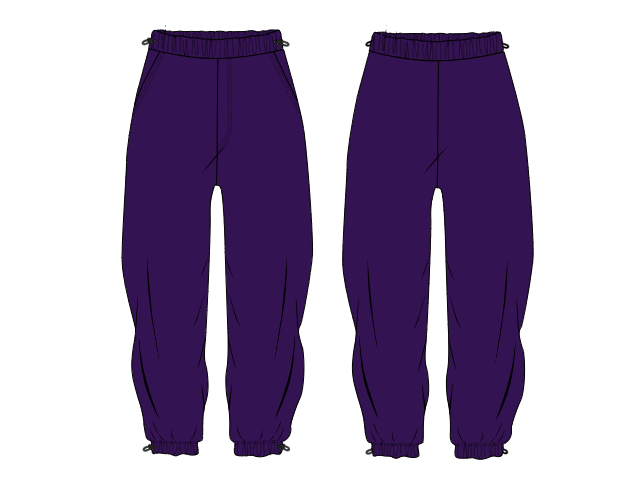
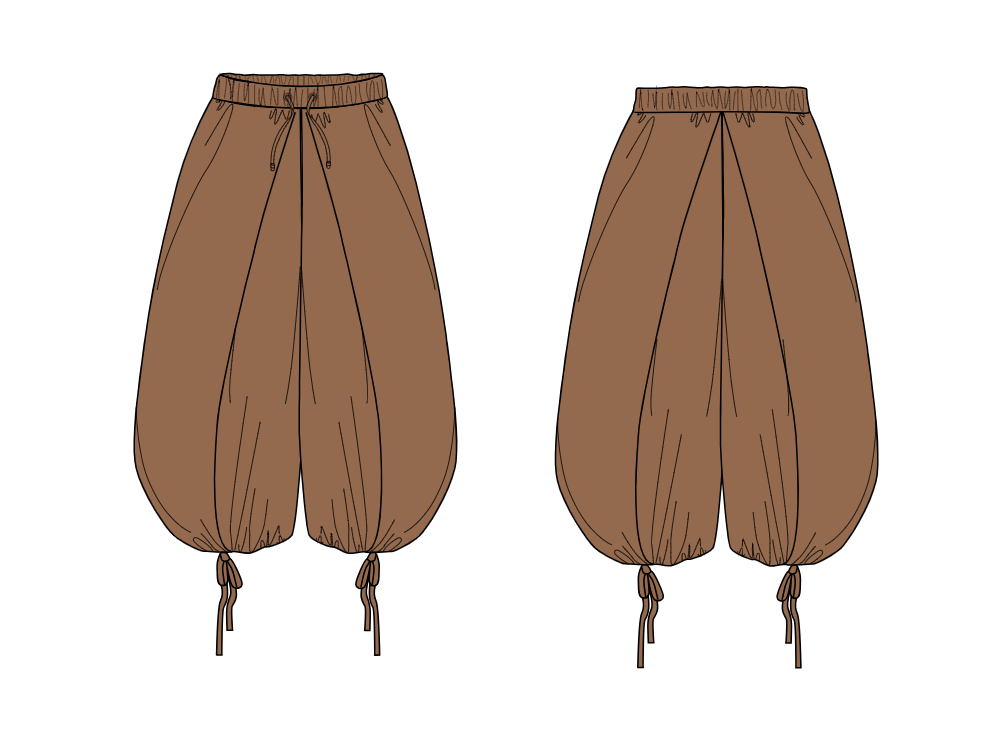
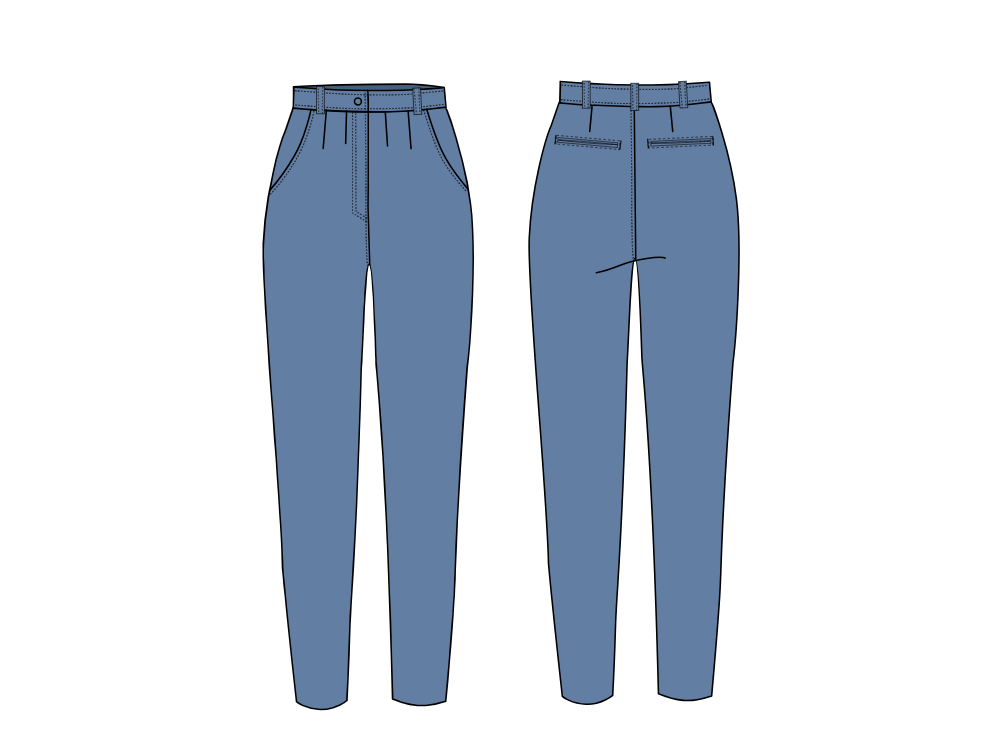
Drawing a pant sketch using Repsketch is both effortless and enjoyable! With Repsketch, you gain access to an extensive collection of vector sketches crafted by professional designers, along with a wide array of design elements for quick and inspiring customization. Whether you opt for pre-made sketches or intricate details, everything is editable as vectors. Moreover, Repsketch provides a user-friendly online vector editor to streamline your customization process.
Convert Pant Sketches to 3D Mockups
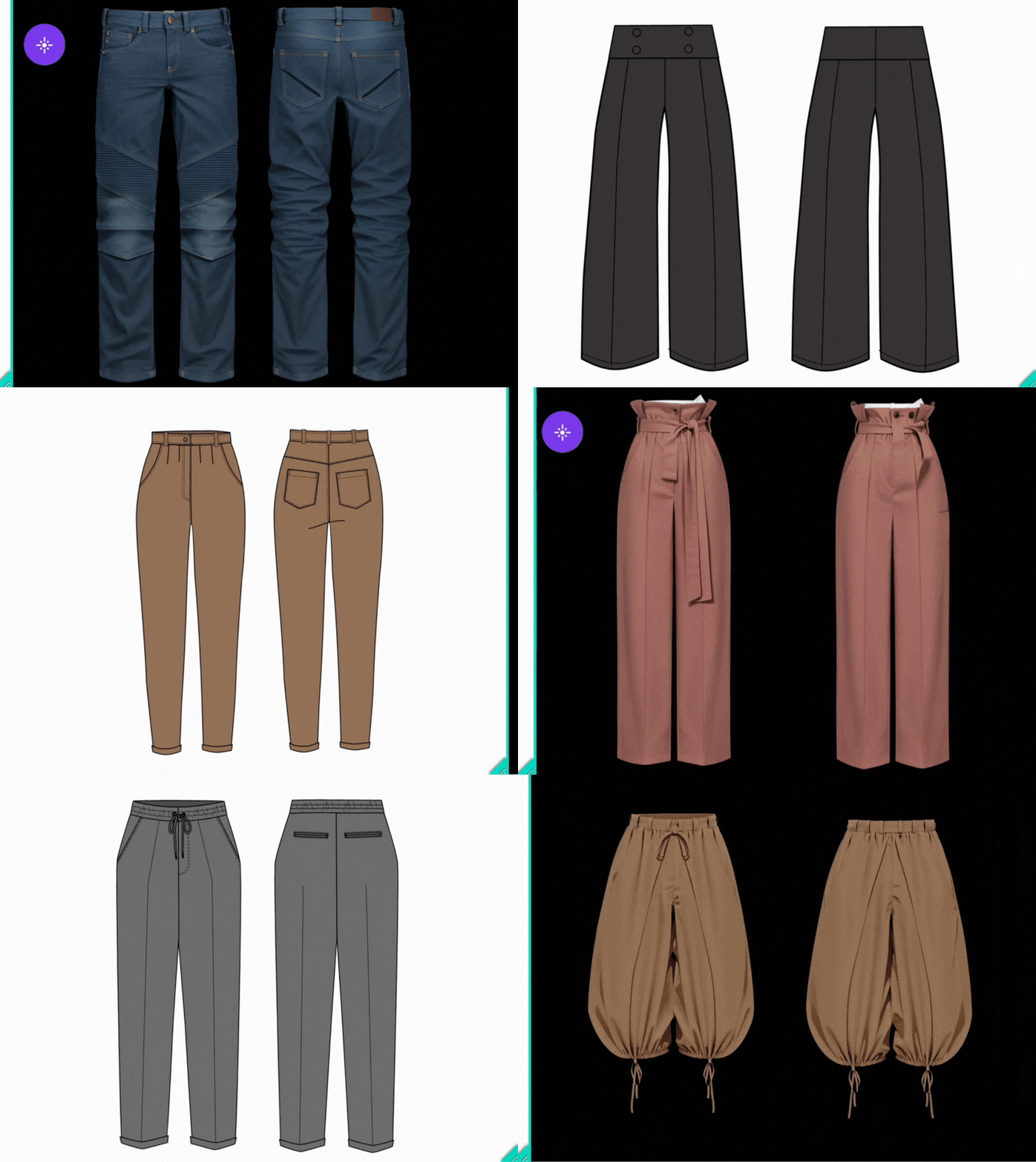
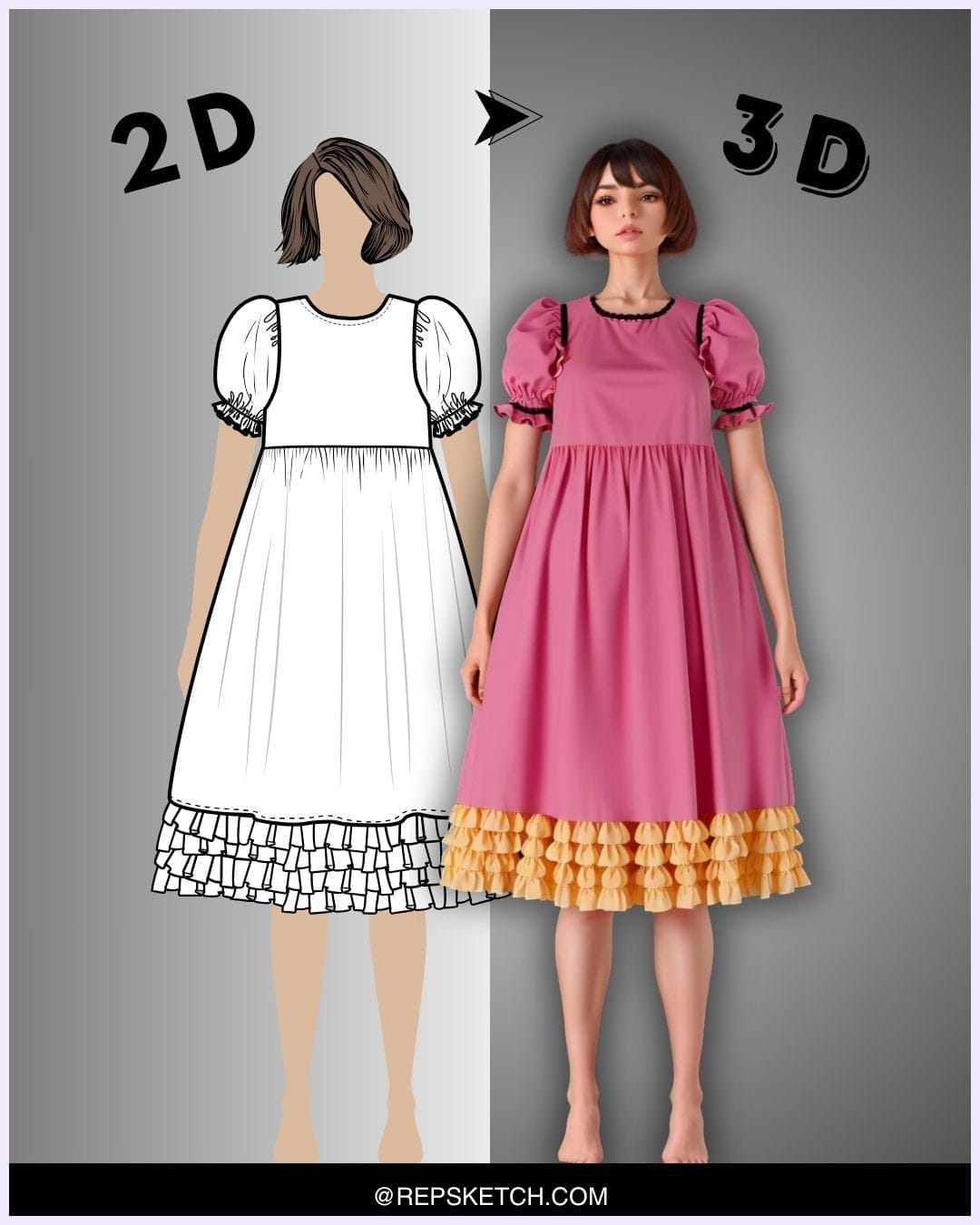
Repsketch offers a cutting-edge tool that uses AI to transform your ideas into photorealistic masterpieces instantly. With advanced technology and three different modes, you can easily convert your pants flat sketches into lifelike visuals. The creative possibilities are limitless. Experience the magic of turning flat 2D images into high-quality, lifelike 3D visuals with ease and bring your pants sketches to life with Repsketch!
 Kumari Anamika
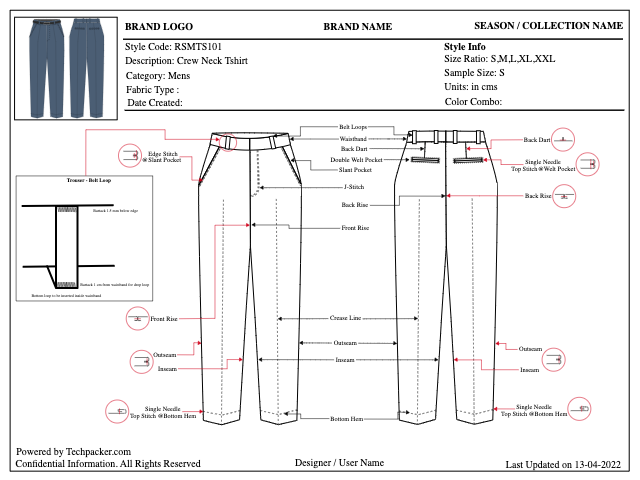
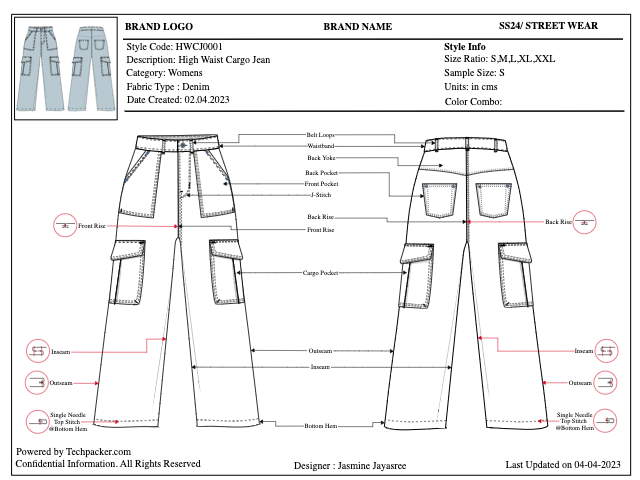
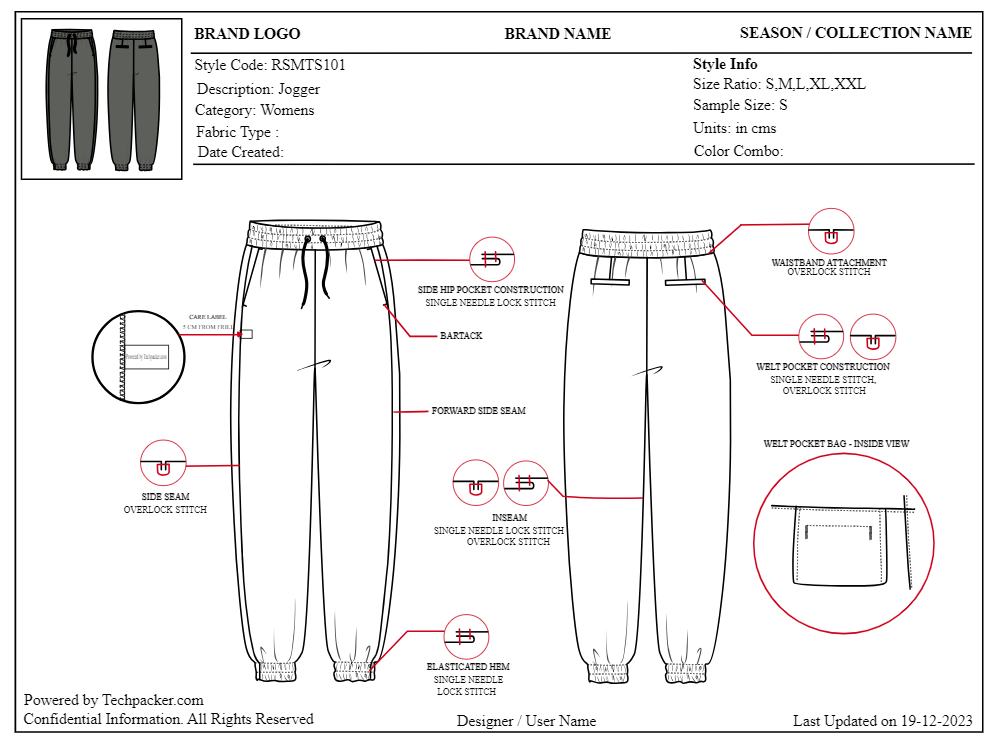
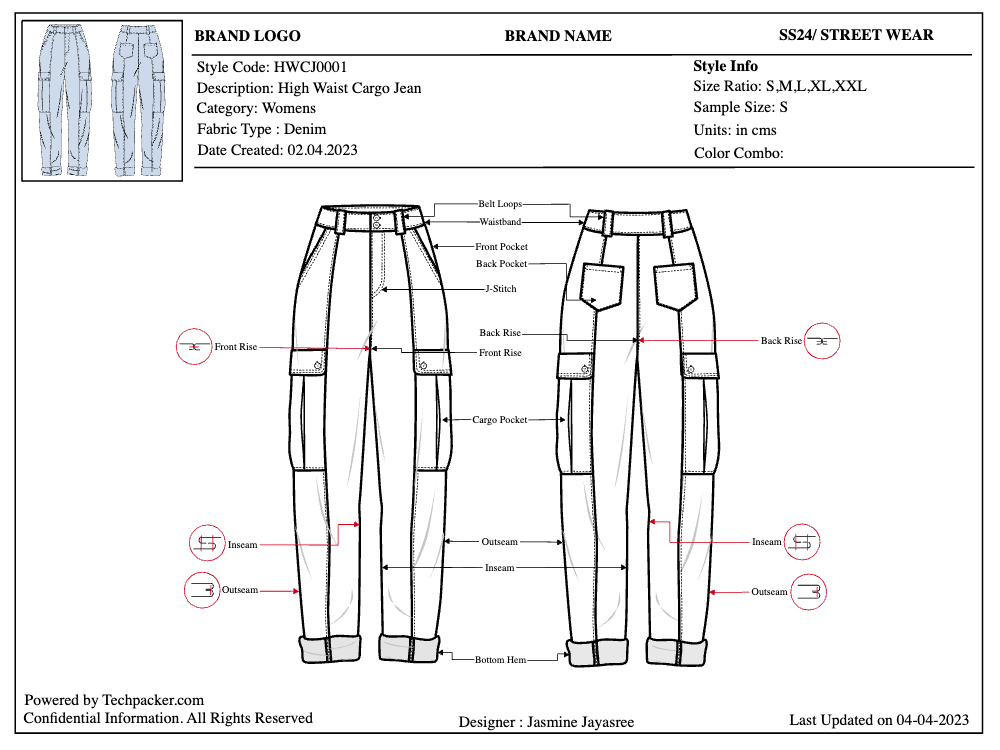
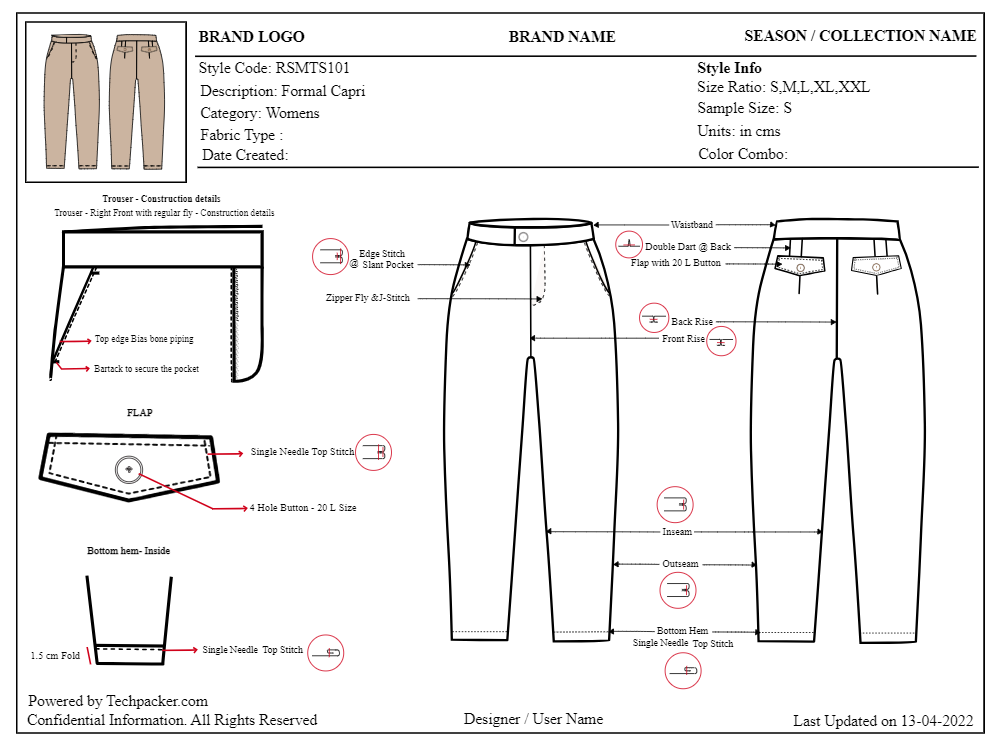
Bonus: Free Pants Techpack Templates
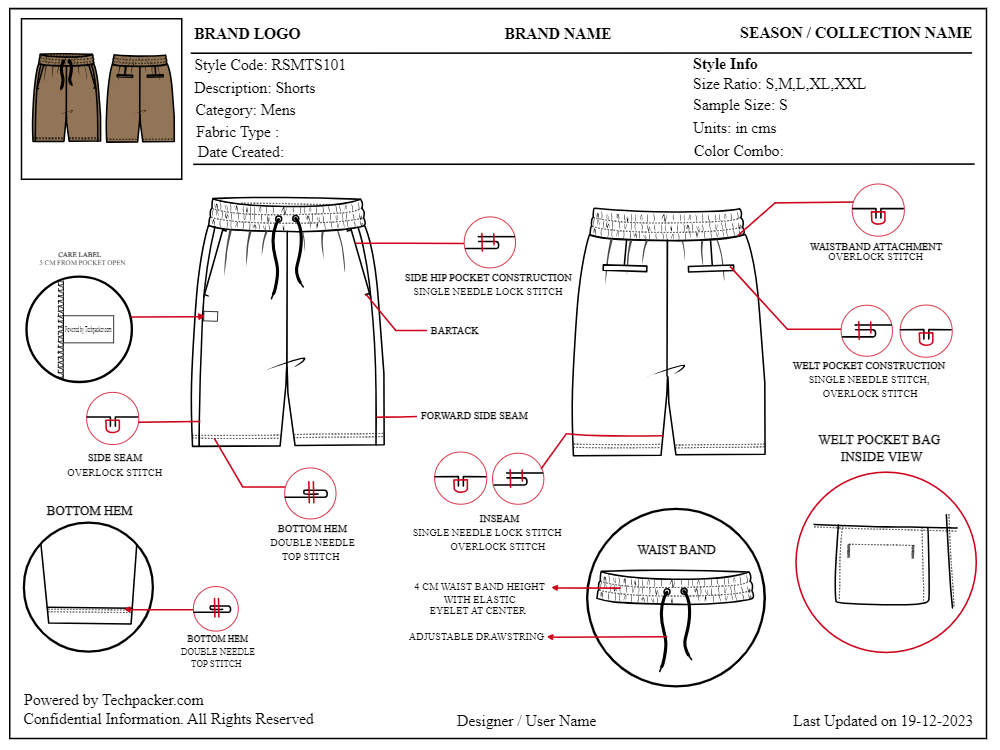
Bonus: Free Pants Moodboard Templates