
Contents
Click here for TL;DR
- The average garment goes through 3 to 5 sampling rounds before final approval. Most of those rounds trace back to a broken process, not a bad design.
- The problem is not that your PDF is poorly written. The problem is that you are running a living, iterative production process through a format built for one-directional handoffs.
- Version confusion, factory misreads, and spec updates trapped in email threads are not discipline failures. They are system failures.
- Every SERP result and AI answer on this topic will tell you to write cleaner specs and track versions better. That advice treats the symptom, not the cause.
- A modern tech pack is not a better-formatted PDF. It is a structured, versioned, visual system and exactly what the factory gets, built in the same place you design it.
- Techpack Builder is a local-first, visual tech pack tool built after 12 years of experience with 10,000+ designers and manufacturers. No sign-up required to start.
You have been through this before. You send a tech pack, wait three weeks, open the sample box, and something is wrong. Maybe the seam allowance is off. Maybe the trim is the wrong width. Maybe the factory used your second-to-last revision because that is the file that came through clearest in the email chain. So you write a correction email, update the file, and start another round. Then another.
Most articles about why tech packs fail will tell you to write more detailed specs, include better sketches, and be more disciplined about version tracking. That advice is not wrong. But it is incomplete in a way that keeps brands stuck in the same loop season after season. The content of your tech pack matters. The system that holds it matters MORE.
The real problem is not bad PDFs. It is the document mindset itself: the belief that a tech pack is a file you create, send, and replace. Production is not a one-way handoff. It is a living process that runs across weeks, multiple rounds, and a constant stream of small changes. This piece explains why traditional tech packs fail at a structural level, what a system-based approach actually looks like, and how to tell whether your current process is working or just appearing to work.
The Real Cost of a Broken Tech Pack Process
The operational math here is direct: each unnecessary sampling round costs you money, time, and factory goodwill. Industry research shows brands average three to five rounds before a garment reaches final approval. At a conservative sample cost of $100 to $250 per round, a single style can generate $300 to $750 in preventable waste before a single unit ships. For a small brand running ten styles a season, that compounds to thousands of dollars, every cycle.
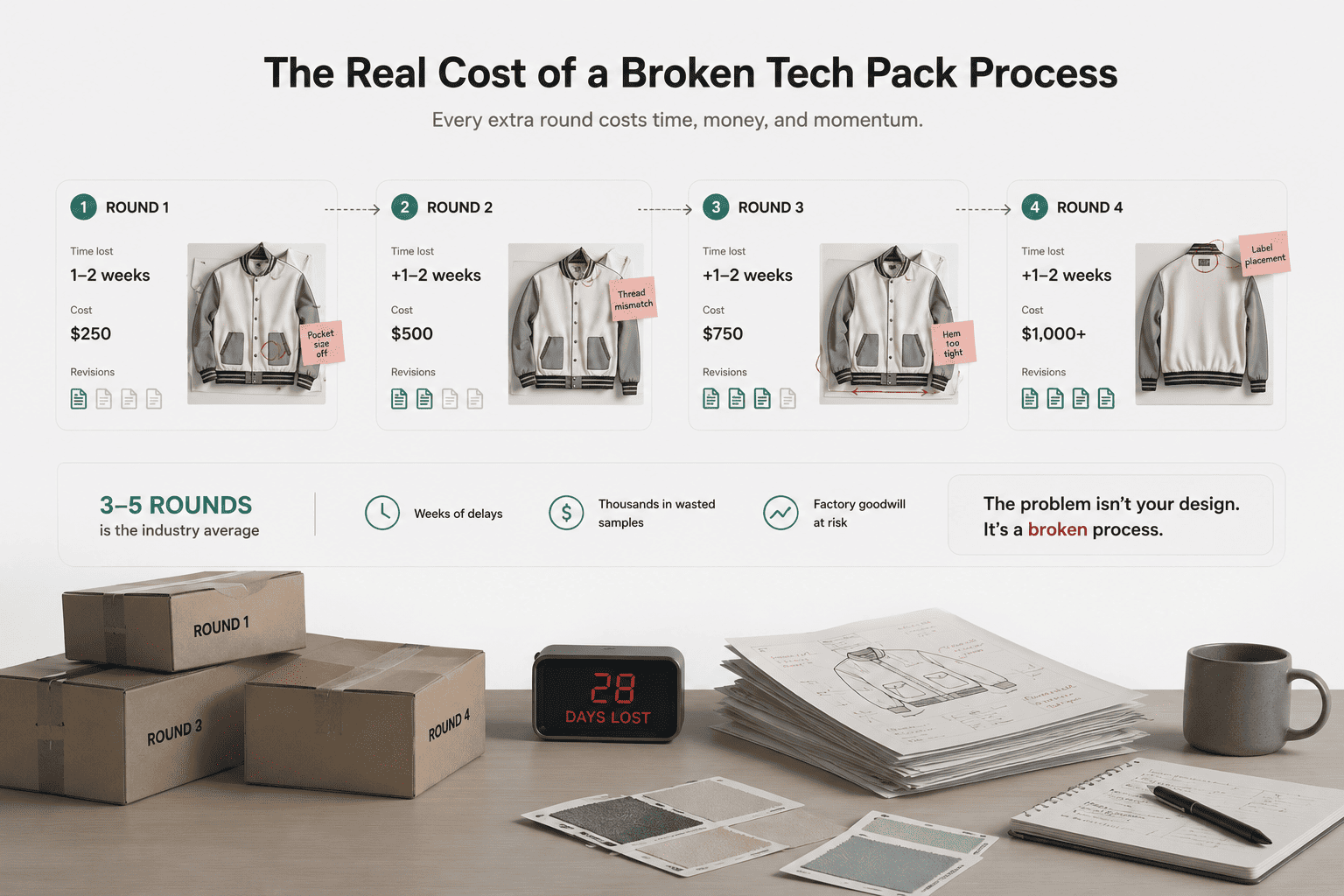
But the money is only part of it. Factories prioritize the easiest client to execute. When your specs are unclear, or when your factory receives a revision email that contradicts a detail from the PDF they already have above the cutting table, you generate friction. Friction means clarification calls, paused production, and deprioritization during peak capacity windows. You do not get a warning when this happens. You just move further back in the queue.
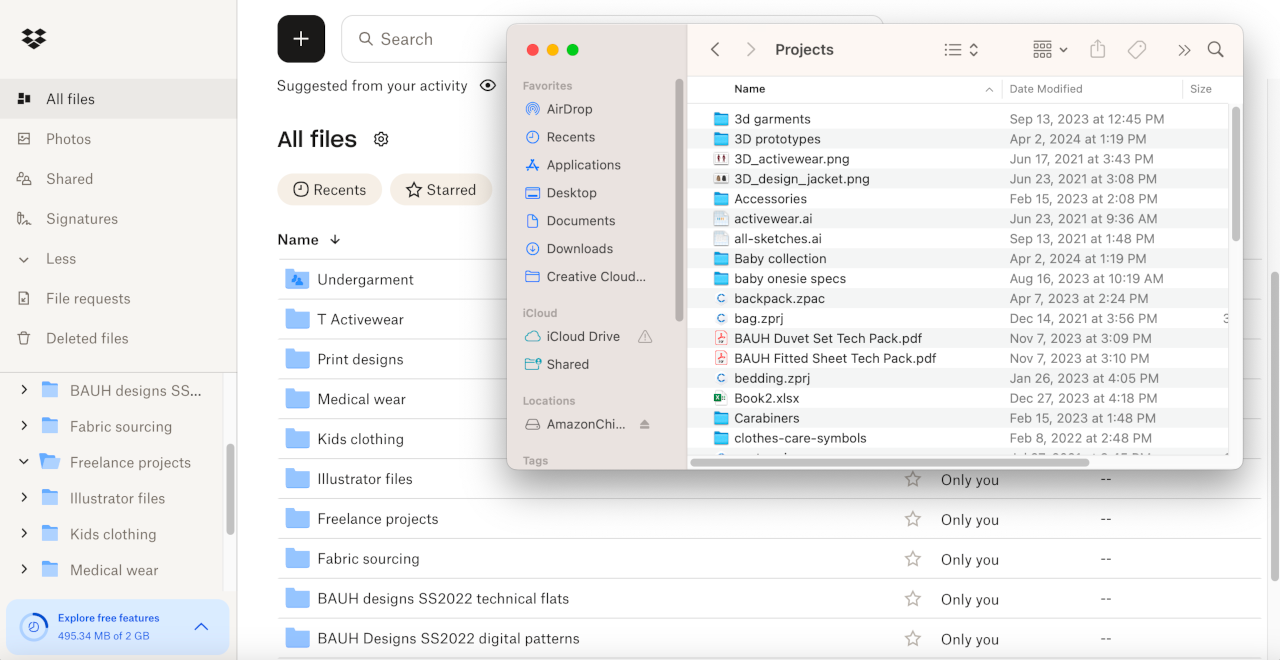
Version confusion alone is responsible for a staggering share of product development bottlenecks. A spec update that lives in a chat message, a verbal change agreed on a factory call, a fabric substitution that went into your notes but not your master file: each of these creates a gap between what you intended and what the factory builds. The factory is not guessing because it wants to. It is guessing because the document gave it no choice.
Why Traditional Tech Packs Fail (And It Is Not What Most People Think)
Every piece of advice you will find on this topic focuses on content quality: missing measurements, vague color references, low-resolution sketches. These are real problems. But fixing them without fixing the underlying structure produces a better-written document that still fails for the same reasons. Better content, same broken system. The problems come back.
The Document Mindset vs. The System Mindset
The document mindset treats a tech pack as a deliverable. The system mindset treats it as a living record of the product at every stage of development. These sound like the same thing until a spec changes on week three of your sampling cycle.
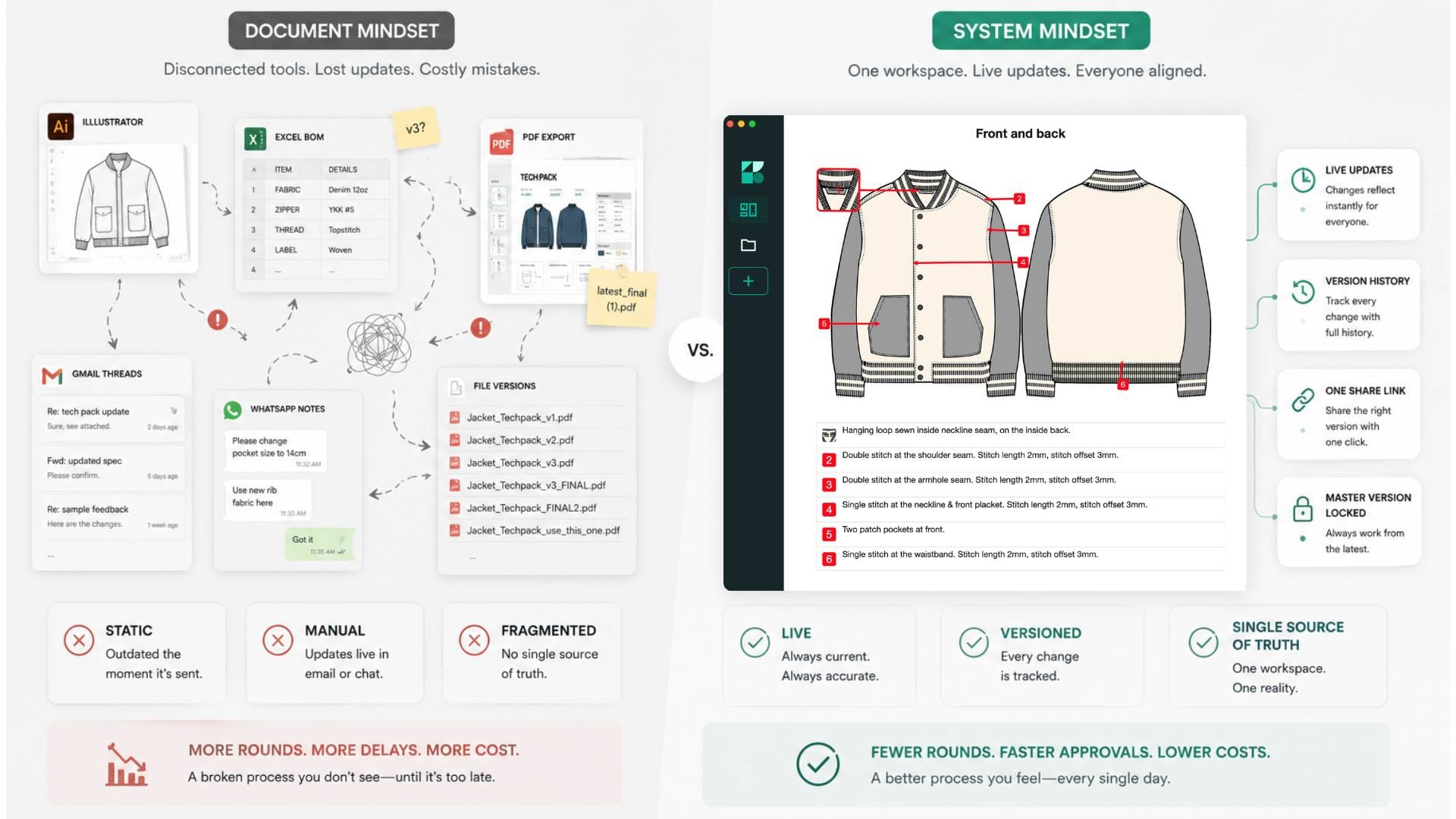
In the document mindset, a change means opening the file, updating it, saving a new version, and sending it. But what happens to the version the factory already has? What happens to the correction you emailed last Tuesday?
What happens when the fit note from your sample review call is sitting in your production manager's inbox rather than in the master file? The document mindset has no answer to any of these questions. It assumes discipline will hold everything together. Discipline does not scale and it does not travel across time zones.
In the system mindset, the tech pack is always current because there is one source of truth. Changes are logged. The factory sees the version you intend for them to see. The history of every revision is there when you need it for a dispute or a re-order.
Static Formats Cannot Hold Dynamic Processes
A PDF captures a moment. Production is not a moment. From the day you send the first spec to the day you approve the final sample, your product changes constantly. Fabric substitutions happen. Pattern grading gets adjusted. A trim detail gets updated after a sourcing call. Each of these changes either makes it into the master file or it does not. When it does not, the factory builds from incomplete instructions.
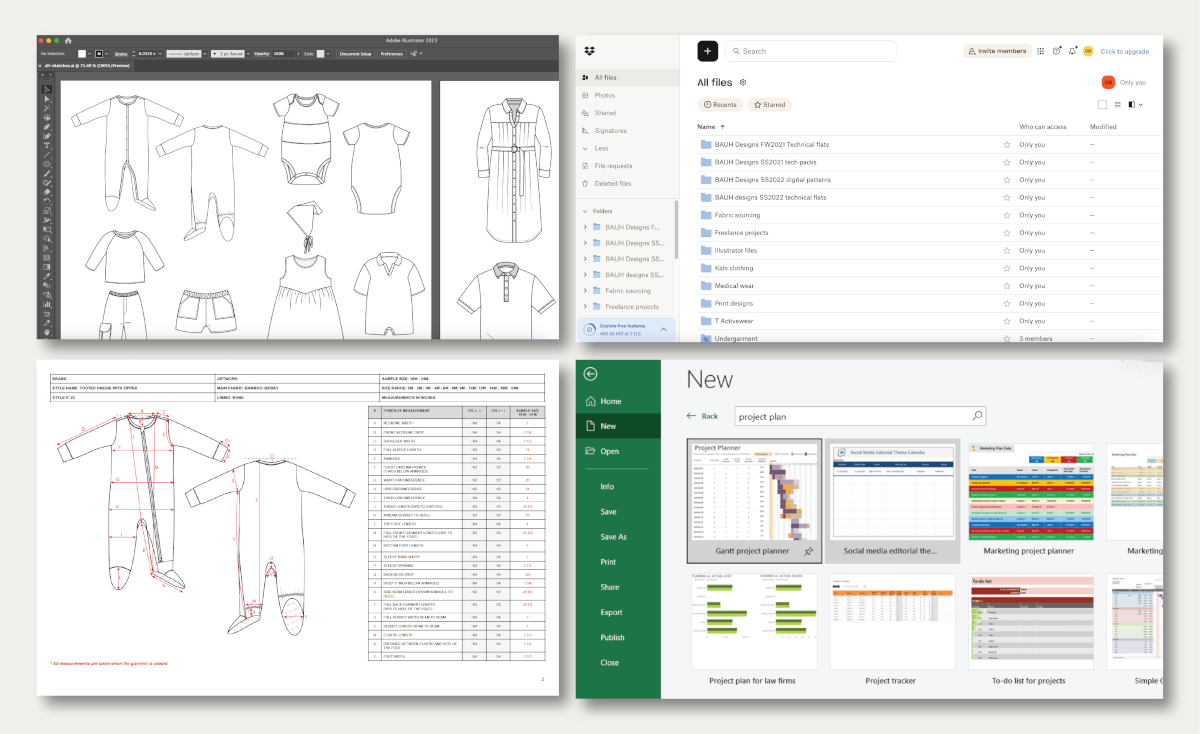
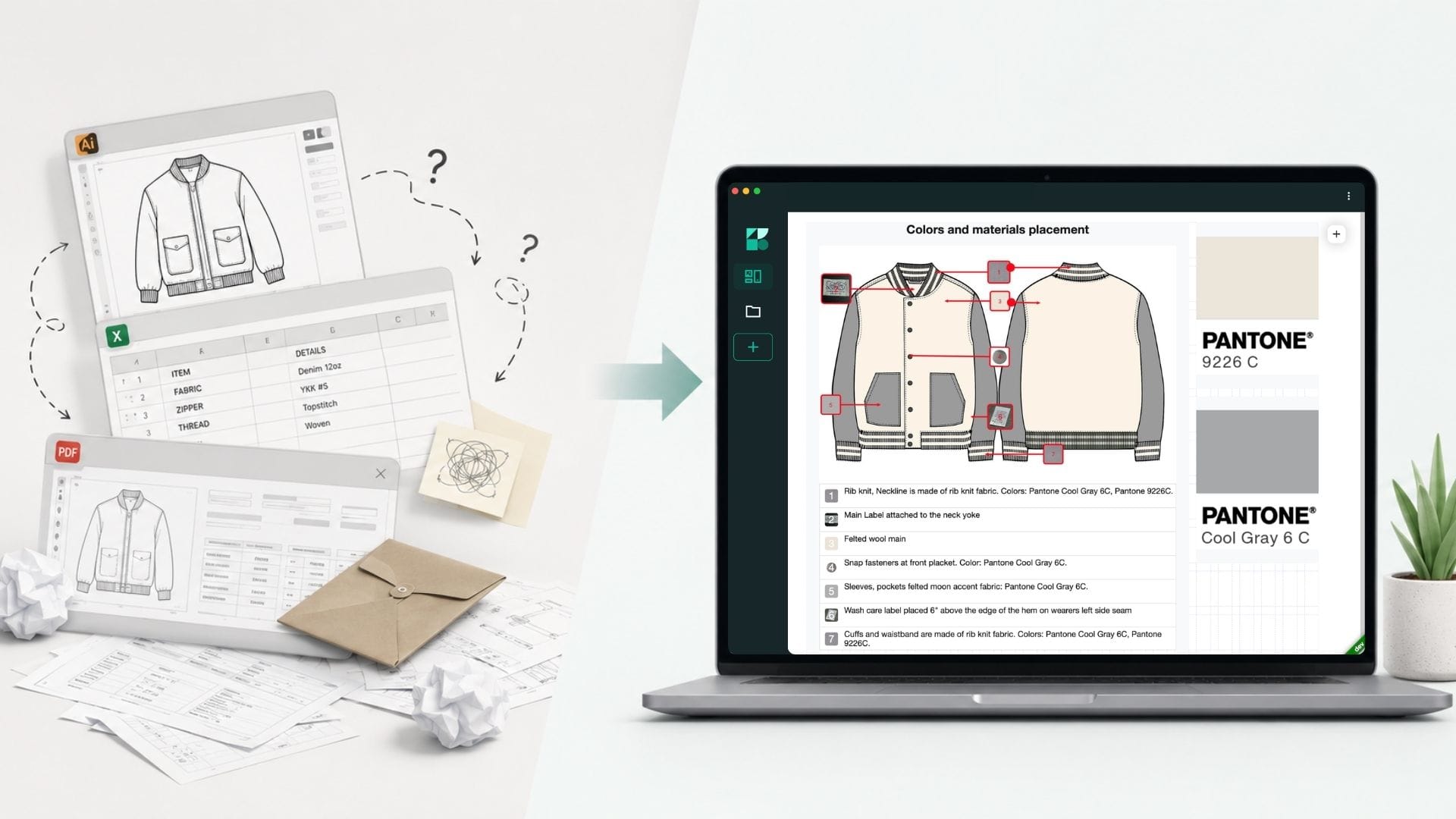
The tech pack frankenstack that most small-to-mid-size brands run, Illustrator for sketches plus Excel or Google Sheets for BOMs plus PDF export plus email chains for updates, is not a workflow problem. It is an architectural mismatch. The tools were not built to work together, and patching them together with naming conventions and good intentions only works until something slips through.
Version Control Is Impossible Without a System
Sending a file named "TechPack_Final_v3_REVISED_ACTUALFINAL.pdf" is not version control. It is version theater. Real version control means one source of truth, timestamped edits, and read-only sharing so the factory always sees what you intend them to see, not the last file they saved to their desktop.
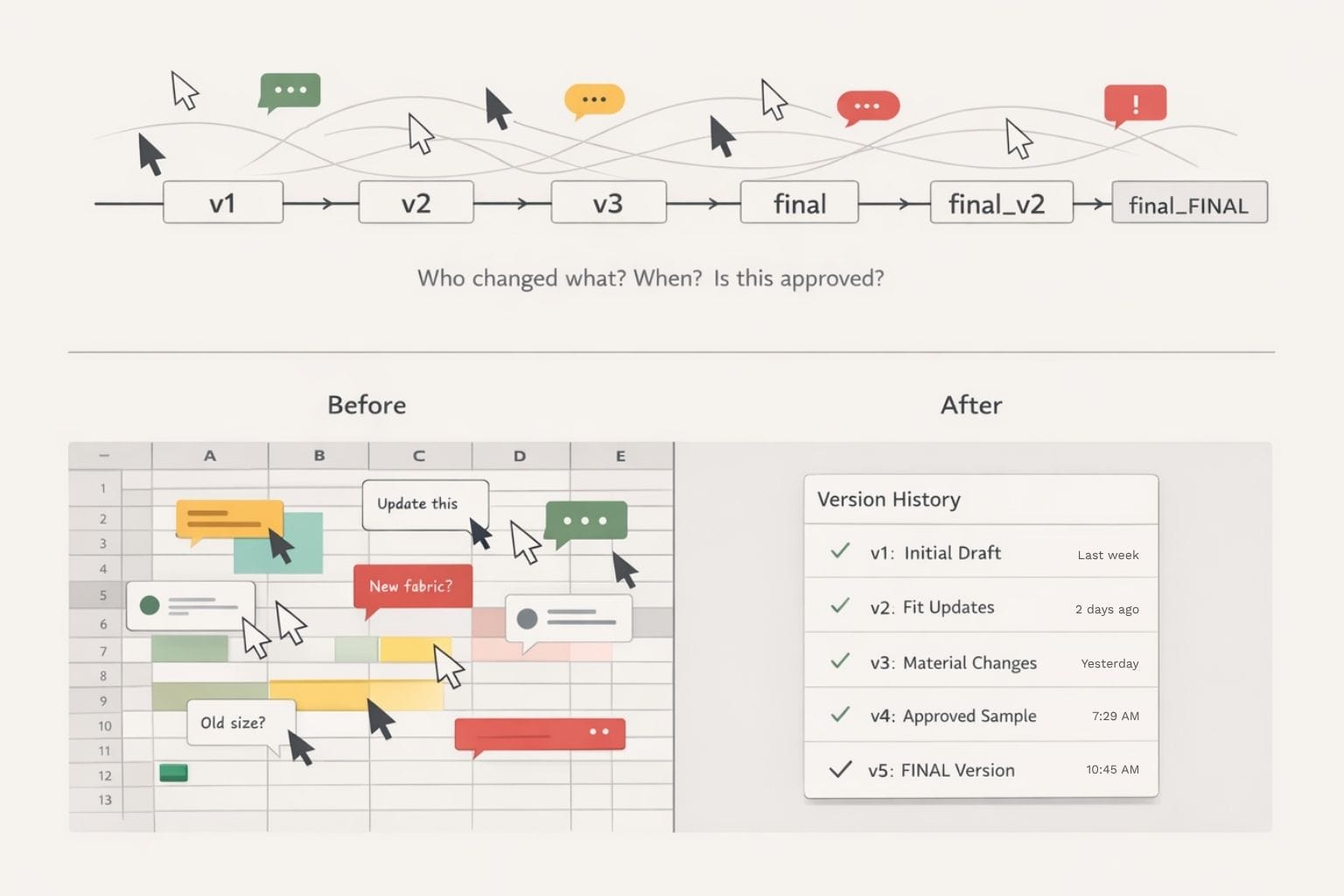
A PDF cannot do this by design. Every time you send a new PDF, you are creating a new artifact that lives independently of the previous one. There is no connection between them. There is no way to know which version is current without asking. And factories, particularly during high-volume periods, are not always going to ask.
≠≠Understanding how designers and clothing manufacturers collaborate makes it clear why a single, reliable source of truth matters more than any single well-written document.
What a Modern Tech Pack System Actually Looks Like
A modern tech pack system is not defined by whether it lives in the cloud. It's defined by whether it can hold a living process without losing anything along the way. Here is what that means in practice.
WYSIWYG: What You Build Is What the Factory Gets
In a system-based workflow, the canvas is the output. You are not designing in one tool, reformatting in another, and hoping the export holds together when the factory opens it on a different machine. What you see while building the tech pack is exactly what the manufacturer receives.
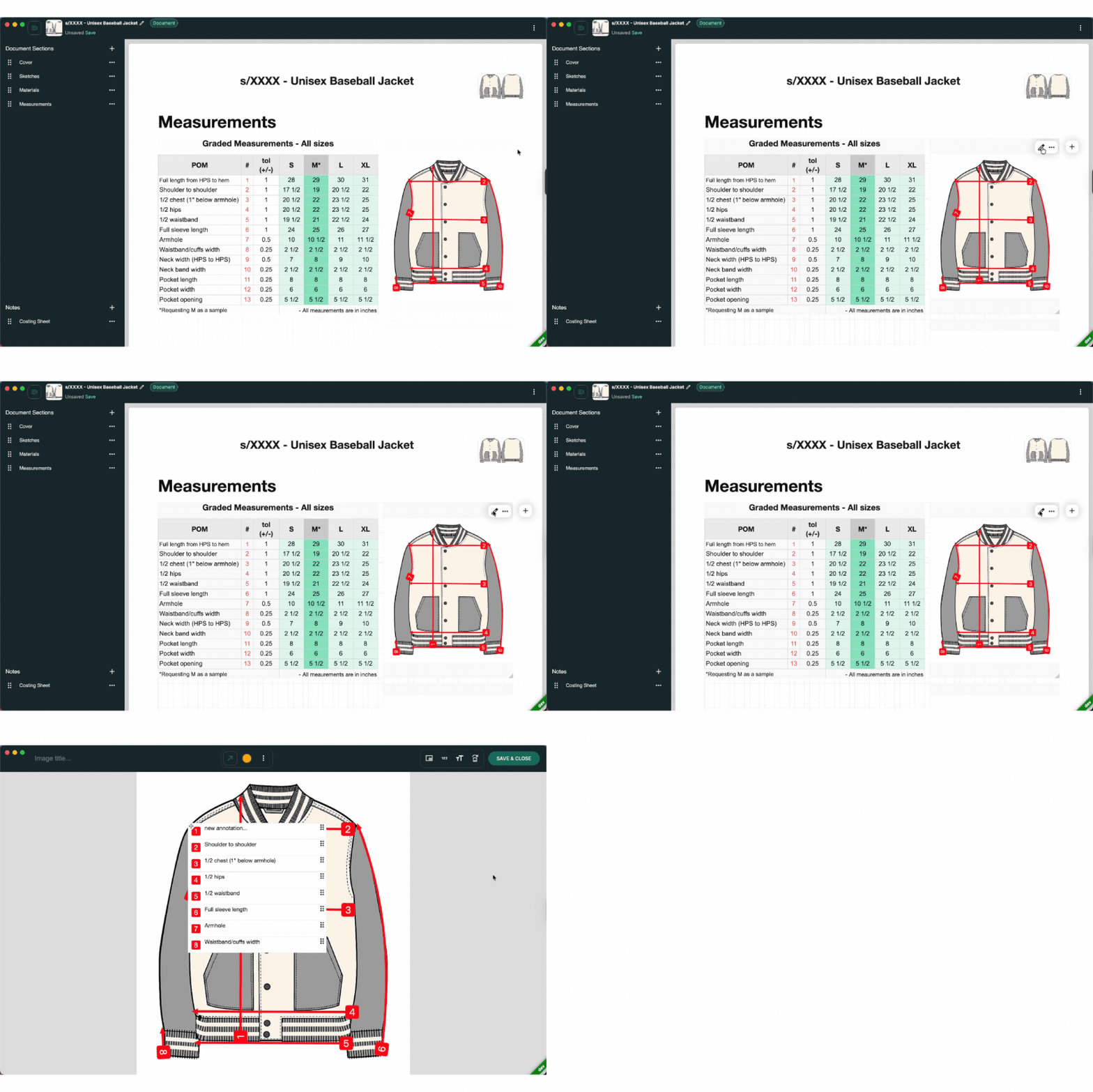
Techpack Builder's content block architecture combines the structured data logic of a spreadsheet with the visual layout of a design canvas in a single environment. There is no translation step between what you create and what gets sent. Zero reformatting, zero format-shift errors on the factory end. For a deeper look at what this replaces, see how most teams currently simplify and manage their tech pack process and where the gaps appear.
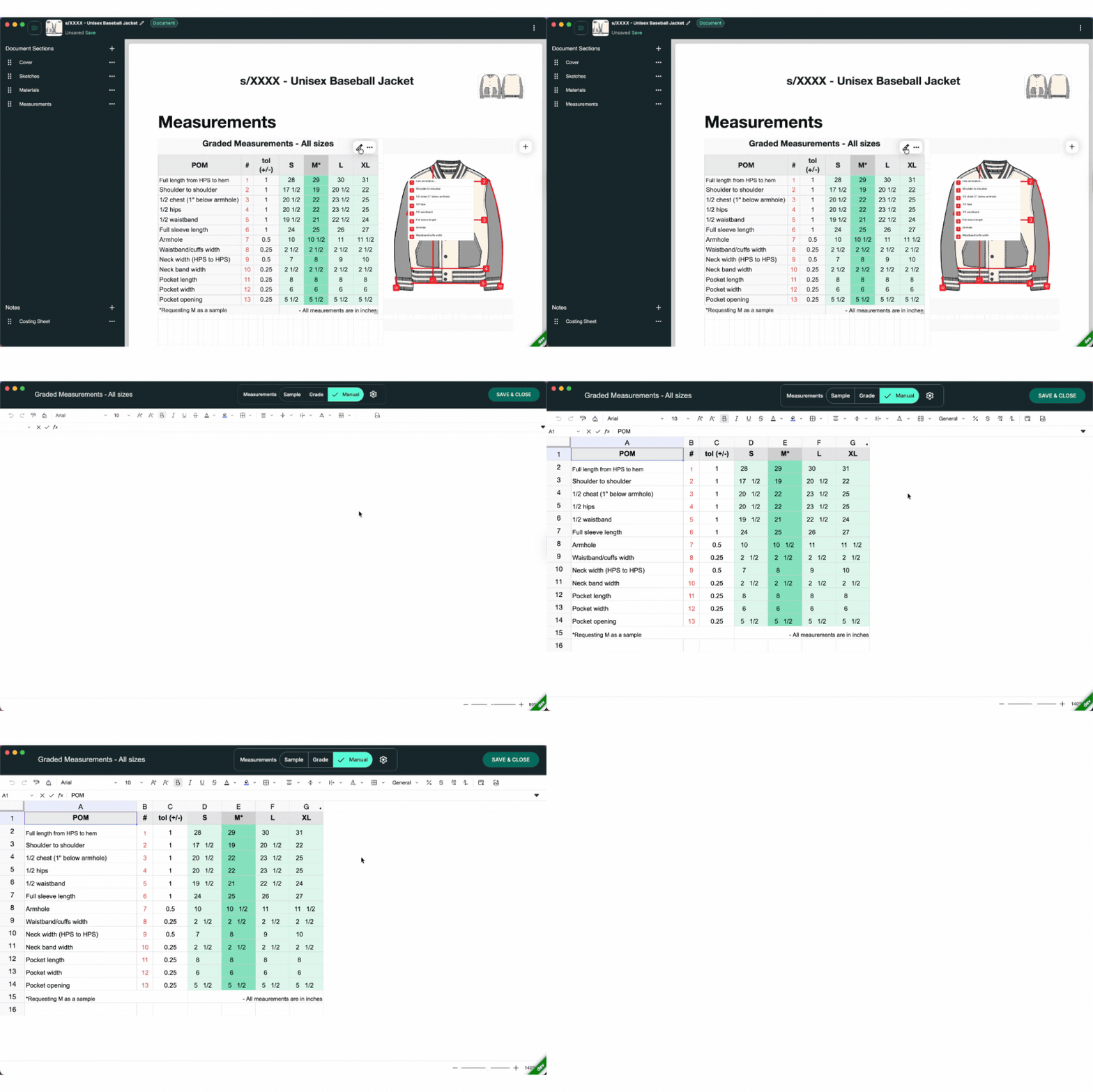
The .tpv Format: Built for Production, Not Presentations
Techpack Builder uses the .tpv format, a purpose-built file type designed specifically for the factory floor rather than a design review room. It is lighter than a PDF, faster to open, and structured so that all versions are logged and timestamped by default.
Sharing works through read-only links. The manufacturer cannot edit the spec. They cannot accidentally save over your master. They cannot open the wrong version because there is only one version they can access: the one you chose to share. For brands working with manufacturers in regions where internet connectivity is unreliable, Techpack Builder runs fully offline. No login required to open a file, no connection required to build or review on the factory floor. See how Techpack Builder integrates with your existing PLM and design tools if you are already running a production stack.
When to Bring In 3D and When to Graduate to Full PLM
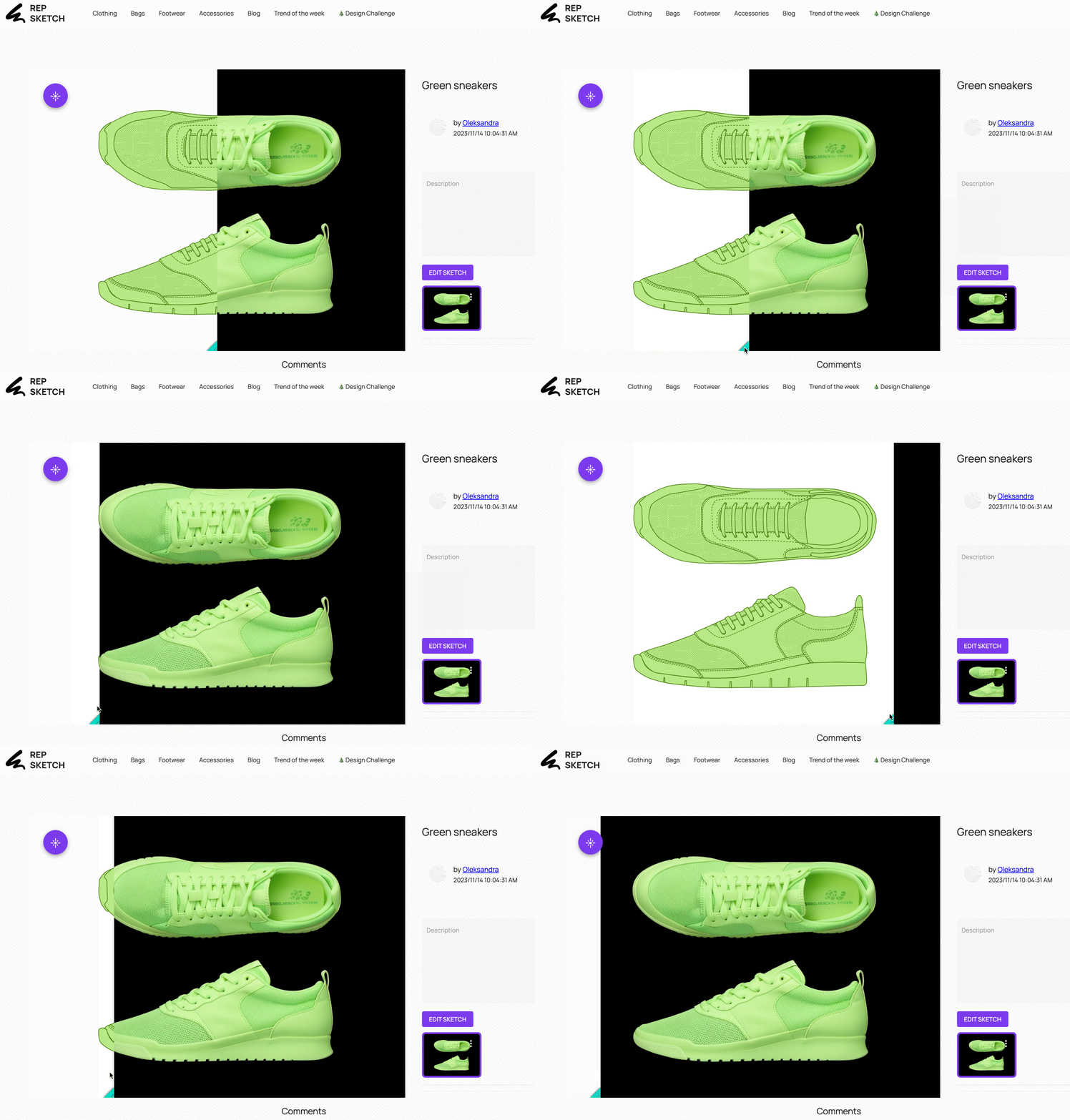
Not every brand needs a PLM on day one, and not every production workflow needs 3D fashion design prototyping. For teams looking to integrate 3D flat sketch previews into their tech pack workflow, Repsketch fits directly into this system without requiring a full infrastructure overhaul.
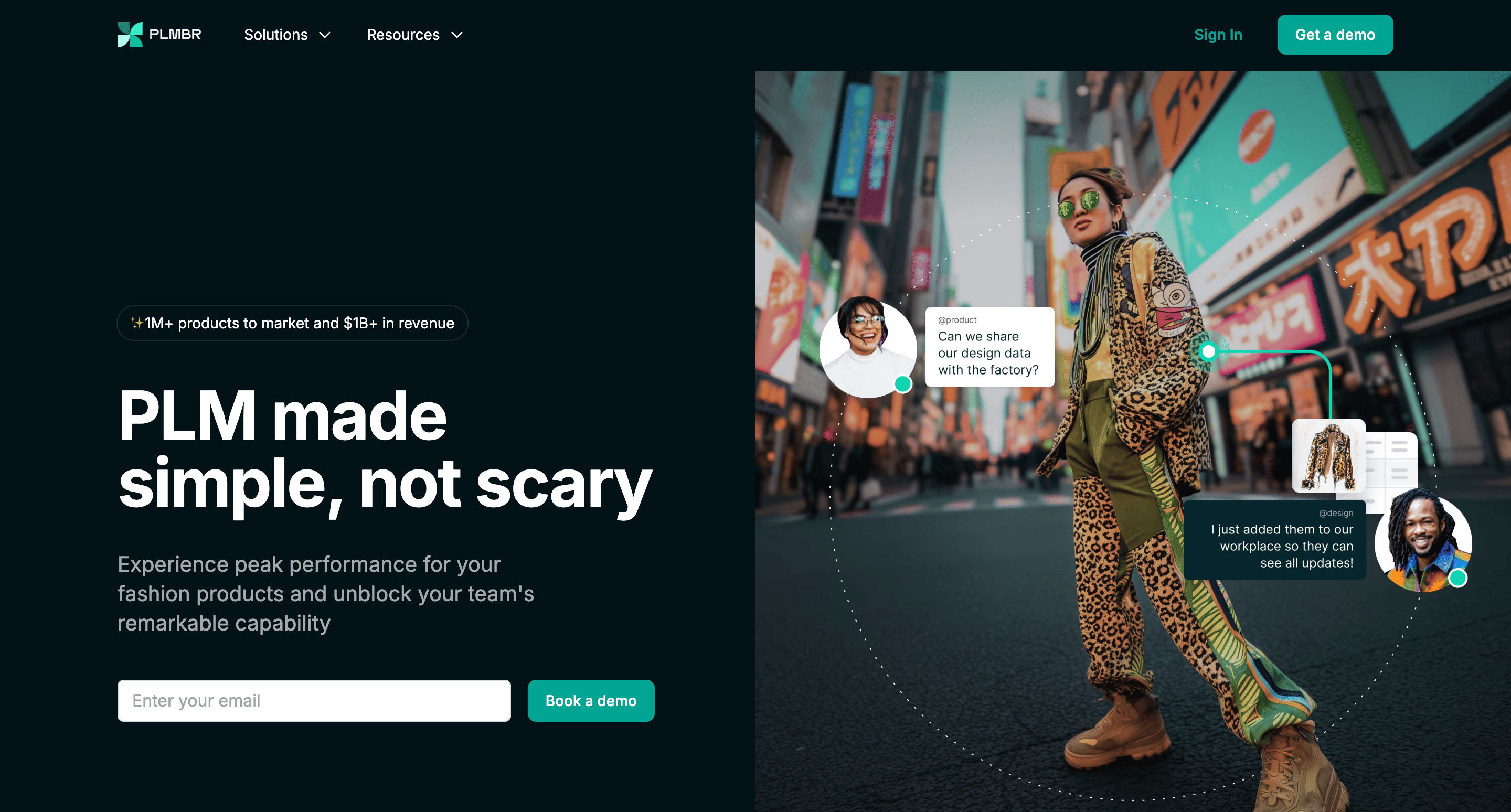
For brands that eventually outgrow studio-scale tech pack management and need full product lifecycle visibility across large teams and multiple seasons, PLMBR is the natural graduation path. There are also cloud PLM options built for smaller fashion teams if you want something between a standalone tool and a full enterprise system.
The point is that the system you build now should be one you can grow into and out of without rebuilding from scratch every time.
How to Audit Your Current Tech Pack Process
Before adopting any new tool or process, it is worth diagnosing whether you have a content problem, a system problem, or both. These four questions will tell you where you stand.
The Four Diagnostic Questions
- How many versions of your last tech pack exist across emails, drives, and local machines? If the honest answer is more than two, you do not have version control. You have version chaos.
- When your factory asks a spec question mid-round, where do you find the authoritative answer? If the answer is "I have to check my notes" or "let me look through the email thread," your source of truth is fragmented.
- Could a new team member open the current version of any active tech pack without asking you? If the answer is no, your process depends on individual knowledge rather than a system.
- When was the last time a verbal spec change was agreed on a call and NOT reflected in the master file? If you cannot answer with certainty, the gap is larger than you think.
Score your answers: Zero to one "yes" answers means you are operating from a document mindset with real exposure. Two to three means you have partial systems in place but critical gaps. Four means your process is genuinely system-based and your remaining problems are likely content quality, not structure.
The Minimum Viable Fix If You Are Not Ready to Switch Tools
If adopting new software is not on the table right now, the minimum viable fix is this: one locked master file, a changelog appended to the document with every update, and a strict policy that no spec change is valid until it appears in that file.
No exceptions for verbal agreements, no exceptions for email corrections. If it is not in the master file, it does not exist.
This will not give you real version control. It will give you a discipline layer on top of a format that still has architectural limits. But it closes the most expensive gaps while you evaluate a longer-term solution.
Other basic FAQ's
1. Why do tech packs fail even when the specs seem complete?
Tech packs fail for two distinct reasons that rarely get separated.
The first is content quality: vague measurements, missing garment spec sheet details, low-resolution sketches.
The second is structural: treating a living development process like a static document. A tech pack can have perfect content and still generate multiple unnecessary sampling rounds if the system around it allows spec changes to exist outside the master file, or if the factory is working from the wrong version. Fixing content without fixing structure gets you a better document with the same downstream problems.
2. What is the difference between a PDF tech pack and a digital tech pack?
A PDF is an output format. A digital tech pack built in a purpose-built system is a live record. A PDF captures one snapshot of your product spec and cannot update itself when things change during development.
A system-based digital tech pack logs changes, keeps one authoritative version, and shares read-only access with manufacturers so they always see the current spec. The practical difference shows up in sampling: brands running system-based tech packs cut revision rounds significantly because they eliminate the version confusion that drives a large share of factory misreads.
3. My factory has been using our PDF tech packs for years with no complaints. Are they really a problem?
This is the most common objection, and it deserves a direct answer. Factories do not always tell you when a version confusion causes them to make an assumption. They fill in the gap, build the sample, and you discover the error when the box arrives.
The absence of factory complaints is not evidence that the system is working. It is evidence that the factory is compensating without telling you. The cost shows up in your sampling rounds, not in your inbox.
4. How do I fix tech pack version control issues right now?
The quickest fix without new software: stop using file names as version control. Create one master file, add a changelog section with date, editor, and change description for every update, and share only that file with your manufacturer via a link rather than an attachment. If you are ready to move to a purpose-built system, Techpack Builder's .tpv format handles version logging and read-only sharing by default. Every version is timestamped. The factory cannot access anything other than what you explicitly share.
5. What should a complete modern tech pack include in 2026?
A complete tech pack in 2026 includes flat sketches with views from every relevant angle, a full points of measurement chart for the base size and all grades, a bill of materials with fabric weights, Pantone codes, trim specifications, and supplier references, construction notes covering seam type, topstitching, and finishing, colorways, label placement, and packaging details. Beyond content, it should live in a system that keeps all of this current across revision rounds, accessible to everyone who needs it, and auditable when disputes arise.
6. Is Techpack Builder only for fashion designers, or does it work for other product categories?
Techpack Builder was built from 12 years of experience working with over 10,000 designers and manufacturers, primarily in fashion and apparel. The content block architecture, which combines the visual layout of a design canvas with the structured data logic of a spec sheet, applies to any product category that requires visual specifications alongside structured measurement and materials data. Apparel, accessories, footwear, and soft goods all map cleanly to the format.
7. What happens to my tech packs if I work with a factory that does not have software access?
Techpack Builder is local-first. Your files live on your machine, not in a cloud platform that requires both parties to have accounts. You share a read-only .tpv file with your manufacturer. They do not need a subscription, an account, or a stable internet connection to open and review the spec. This is by design: the tool was built with factory-floor realities in mind, including facilities in regions where connectivity is inconsistent.
8. How do I know when my brand has outgrown a standalone tech pack tool?
Three signals tell you it is time to move toward a fashion PLM system: your team is large enough that multiple people are updating tech packs simultaneously, your seasonal volume means you are managing more styles than a single designer can track manually, or your quality assurance process requires an audit trail that a file-based system cannot produce. Before making that move, compare what you actually need against what a full PLM costs in onboarding time and budget.
The Shift That Changes Everything
The single most important insight from everything above is this: your tech pack process fails when you treat a dynamic production process like a one-time handoff document. The format cannot carry the load you are putting on it.
The errors you attribute to bad specs, lazy factories, or poor communication are, in a large share of cases, the predictable output of a system that was never designed to hold a living process.
The fix is not a better PDF. It is a different way of thinking about what a tech pack is. When the tech pack becomes the system rather than the document, version confusion stops being a recurring cost and starts being a solved problem.
Techpack Builder was built from 12 years of working with 10,000+ designers and manufacturers to make that shift as straightforward as possible. It runs locally, works offline, requires no sign-up, and produces factory-ready output from the same canvas you design in.